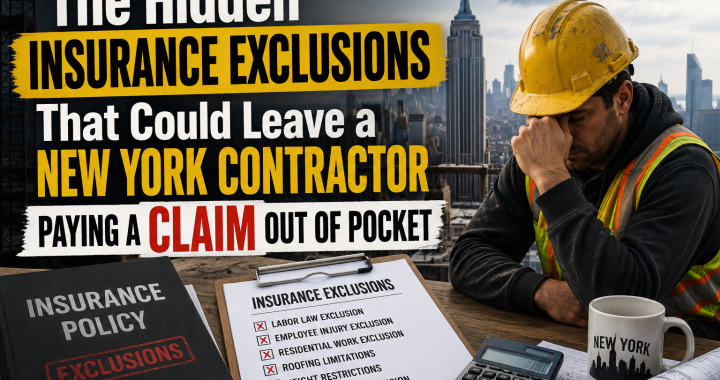
The Fine Print That Can Bankrupt a Contractor: Hidden General Liability Exclusions Every New York Contractor Must Understand

Most New York contractors believe that once they purchase a commercial general liability (CGL) policy, they are protected against lawsuits and property damage claims. Unfortunately, that assumption can prove devastatingly wrong.

In today’s insurance marketplace, especially in New York construction, many policies contain exclusions and limitations that can significantly reduce or even eliminate coverage for some of the most common construction-related claims. Contractors often discover these hidden exclusions only after a claim occurs—when it is too late to purchase additional protection.

With New York’s aggressive litigation environment, complex Labor Law exposures, and increasingly restrictive underwriting standards, understanding what your general liability policy does not cover may be just as important as understanding what it does cover.

Here are some of the most important hidden general liability exclusions that every New York contractor should know about.

1. Action-Over Exclusions

Perhaps no exclusion creates more concern for New York contractors than the action-over exclusion.

New York Labor Law Sections 240 and 241 allow injured employees of subcontractors to pursue claims against general contractors and property owners under certain circumstances. An action-over exclusion can eliminate coverage for these claims, leaving contractors exposed to potentially catastrophic lawsuits.

Many contractors don’t realize their policy contains this exclusion until they receive a denial letter after a serious workplace injury.

If you perform construction work in New York, understanding your policy’s action-over language is critical.

2. Height Limitation Exclusions

Many general liability policies issued to contractors now contain strict height restrictions.

Examples include exclusions for work performed:

  • Above two stories
  • Above three stories
  • Above fifteen feet
  • Above thirty feet

This presents a serious problem because many contractors regularly perform work that exceeds these limits without realizing they may be operating outside their coverage parameters.

Roofers, painters, masons, restoration contractors, window installers, and siding contractors are particularly vulnerable to height restriction exclusions.

3. Residential Construction Exclusions

Numerous insurance carriers restrict or exclude work performed on residential projects.

A contractor may believe they have coverage for all operations only to discover their policy excludes:

  • Single-family residences
  • Multi-family housing
  • Condominium projects
  • Apartment buildings
  • Mixed-use residential properties

Given the large amount of residential construction activity in New York, failing to identify these exclusions can create substantial uninsured exposure.

4. Subcontractor Warranty Endorsements

Many policies contain subcontractor warranty provisions that require contractors to obtain specific documentation before coverage applies.

These requirements often include:

  • Written contracts
  • Hold harmless agreements
  • Additional insured endorsements
  • Certificates of insurance
  • Primary and non-contributory wording
  • Waivers of subrogation

Failure to obtain even one required document may allow an insurer to deny coverage for a claim involving a subcontractor.

Many contractors mistakenly believe that simply receiving a certificate of insurance satisfies all policy requirements.

5. Exterior Insulation and Finish System (EIFS) Exclusions

EIFS claims have historically produced significant losses for insurance companies. As a result, many contractors’ policies specifically exclude work involving EIFS materials.

Contractors performing stucco, synthetic stucco, waterproofing, or exterior finishing operations should carefully review their policies to determine whether these exclusions apply.

Even contractors performing repair work on EIFS systems may discover they have little or no coverage.

6. Classification Limitation Endorsements

Insurance companies frequently issue policies restricting coverage only to the classifications specifically listed on the declarations page.

For example, a contractor insured as a carpenter who performs roofing, demolition, excavation, or concrete work may discover that these operations are excluded because they were never properly reported.

As businesses evolve and expand, coverage gaps can develop if operations are not updated regularly.

7. Designated Ongoing Operations Exclusions

Some policies specifically exclude certain operations, equipment, or activities.

Examples include exclusions for:

  • Demolition
  • Excavation
  • Structural work
  • Roofing
  • Waterproofing
  • Environmental work
  • Lead or asbestos exposures
  • Fire suppression systems

Contractors should review these endorsements carefully to ensure their actual operations match what the policy covers.

8. Professional Liability Exclusions

General liability insurance typically does not cover professional services.

Contractors who provide:

  • Design services
  • Engineering recommendations
  • Construction management
  • Project consulting
  • Building specifications

may require separate professional liability coverage.

A contractor can be sued for professional negligence even if no physical property damage occurs.

9. Employee Injury Exclusions

General liability policies generally exclude bodily injury claims brought by employees.

Contractors sometimes mistakenly assume that if workers compensation denies a claim, their general liability policy will respond. In most cases, employee injury exclusions prevent this.

This makes maintaining proper workers compensation coverage absolutely essential.

10. Contractual Liability Limitations

Many construction projects require contractors to sign broad indemnification agreements.

However, not all contractual obligations assumed by contractors are covered under general liability policies.

Some contractual promises may extend beyond what the insurance policy actually covers, potentially creating significant uninsured liabilities.

Contractors should always have construction contracts reviewed carefully before signing.

Why These Exclusions Matter More in New York

New York remains one of the most challenging insurance environments in the country for contractors. High litigation costs, Labor Law exposures, rising jury verdicts, and increasingly restrictive insurance markets have forced many carriers to limit coverage through exclusions and endorsements.

A policy with a low premium may ultimately become the most expensive insurance purchase a contractor ever makes if a claim occurs and coverage is denied.

The difference between a properly structured policy and an improperly structured policy can literally determine whether a contractor survives a major lawsuit.

Three Common Google Searches Contractors Use When Looking for General Liability Help

Contractors searching for answers regarding coverage problems frequently use search phrases such as:

  • “Best general liability insurance for New York contractors”
  • “What does contractor general liability insurance cover?”
  • “Insurance broker specializing in New York construction insurance”

If you’re searching these phrases, it’s probably time to have your coverage reviewed by a professional who understands New York construction risks.

How BGES Group Can Help

BGES Group is a boutique insurance brokerage specializing in New York construction insurance. For more than 45 years, we have helped contractors navigate the increasingly complex insurance marketplace while identifying potential coverage gaps before they become financial disasters.

We specialize in:

  • Commercial General Liability Insurance
  • Workers Compensation Insurance
  • Umbrella and Excess Liability Coverage
  • Builders Risk Insurance
  • Contractor Package Policies
  • Commercial Auto Insurance
  • Surety and Bonding Programs
  • Subcontractor Risk Management
  • Contract Review Assistance
  • Construction Risk Analysis

Unlike many large insurance agencies where accounts may be serviced by multiple people, BGES Group provides personalized service with direct access to experienced construction insurance professionals who understand the unique challenges facing New York contractors.

Our goal is simple: help contractors identify coverage gaps, reduce risk, and protect the businesses they have worked so hard to build.

Contact BGES Group

Gary Wallach
BGES Group

Phone: (914) 806-5853
Email: bgesgroup@gmail.com
Website: BGES Group

Informational Disclaimer: This article is provided for educational and informational purposes only and does not constitute legal, insurance, tax, or professional advice. Insurance policies vary significantly by carrier, endorsement, and jurisdiction. Coverage determinations depend upon the specific terms, conditions, exclusions, and endorsements contained within each individual policy. Contractors should consult qualified legal counsel and licensed insurance professionals regarding their particular circumstances and insurance needs before making coverage decisions.

The Contractor’s Insurance Survival Guide: 7 Questions Every New York Contractor Should Ask Before Renewing Coverage

For contractors working in New York, insurance renewal is not just an administrative task—it is a critical financial checkpoint that can determine whether a business is properly protected or dangerously exposed. In a state where construction liability laws are among the most aggressive in the country, especially under New York Labor Law §§240 and 241, the difference between a well-structured insurance program and a poorly designed one can mean millions of dollars in uncovered losses.

Yet many contractors approach renewal with a single focus: premium. If the price is close to last year’s, or slightly lower, the policy is often renewed without deeper review. That approach may work in simpler industries, but in New York construction, it is one of the most dangerous mistakes a contractor can make.

A smarter approach is to ask the right questions before signing on the dotted line. Below are seven essential questions every New York contractor should ask before renewing general liability and related insurance coverage.

1. Does My Policy Truly Cover New York Labor Law Claims?

New York Labor Law §§240 and 241—often referred to as the “Scaffold Law” and its companion statute—create strict liability exposure for contractors and property owners involving elevation-related injuries and construction site safety violations.

In practical terms, this means a contractor can be held fully responsible for a serious injury even if they did not directly cause it or if the worker contributed to the accident.

Many contractors assume their general liability policy automatically covers these exposures. Unfortunately, some policies contain:

  • Labor Law exclusions
  • Sub-limits for construction-related injury claims
  • Restrictive endorsements that narrow protection

If Labor Law coverage is missing or limited, a single fall from a ladder or scaffold can result in catastrophic uninsured losses.

2. Are There Any Exclusions That Could Eliminate Coverage When I Need It Most?

Insurance policies are defined not only by what they cover—but by what they exclude. In New York contractor policies, exclusions are often where the real risk lies.

Common exclusions include:

  • Height restrictions (e.g., no work above 10–15 feet)
  • Roofing exclusions
  • Residential construction exclusions
  • Employee injury or cross-employee exclusions
  • Action-over exclusions
  • Designated operations exclusions

The danger is not always obvious during renewal. A policy may appear identical year to year, but subtle endorsement changes can dramatically reduce protection.

One overlooked exclusion can turn a major claim into a total financial loss.

3. Do I Have Proper Additional Insured Coverage for All Contracts?

In New York construction, nearly every contract requires subcontractors to provide additional insured status to:

  • Property owners
  • General contractors
  • Construction managers

However, not all additional insured endorsements are equal.

Contract requirements often specify:

  • CG 20 10 (ongoing operations)
  • CG 20 37 (completed operations)
  • Primary and non-contributory wording
  • Coverage triggered by written contract language

If the policy does not match contractual requirements exactly, the contractor may technically be in breach of contract—even if a certificate was issued.

Worse, when a claim occurs, the insurance company may deny defense or indemnity for the upstream parties, leaving the contractor exposed to lawsuits from both sides.

4. Is My Umbrella or Excess Liability Coverage Enough for a Serious Loss?

Primary general liability policies typically provide $1 million per occurrence limits. In today’s New York construction environment, that amount is often not enough.

Serious construction accidents can easily result in:

  • Multi-million-dollar settlements
  • Permanent disability claims
  • Lifetime medical care obligations
  • Pain and suffering awards

It is not unusual for Labor Law claims to exceed $5 million, $10 million, or more.

Without sufficient umbrella or excess liability coverage, contractors may find themselves personally exposed after primary limits are exhausted.

Renewal time is the moment to evaluate whether your excess protection actually matches your risk—not just your contract minimums.

5. Are My Subcontractors Properly Insured and Verified?

One of the most common sources of uninsured liability comes from subcontractor risk.

Contractors often assume that subcontractors carry proper insurance. However, problems arise when subcontractors:

  • Provide expired certificates
  • Lack proper endorsements
  • Do not carry sufficient limits
  • Fail to name the contractor as additional insured

If a subcontractor causes an accident and their insurance is inadequate or invalid, liability may flow back to the hiring contractor.

A strong insurance program includes a system for:

  • Certificate tracking
  • Endorsement verification
  • Ongoing compliance review
  • Contract alignment

Without this, contractors may unknowingly absorb risk that was supposed to be transferred.

6. Are My Completed Operations Covered Properly?

Completed operations coverage is one of the most overlooked but critical components of a contractor’s insurance program.

This coverage protects against claims that arise after a project is finished, including:

  • Structural failures
  • Water damage
  • Construction defects
  • Falling materials
  • Electrical or mechanical issues

Many contractors assume they are no longer exposed once the job is completed. In reality, claims can arise months or even years later.

Even more important is whether completed operations coverage extends to additional insureds. Without it, owners and general contractors may be left exposed long after the project is finished.

7. Is My Policy Structured for New York Construction Risk—or Just a Generic Form?

Not all general liability policies are designed for New York construction.

Some policies are written for broad national use and may not properly account for:

  • New York Labor Law exposures
  • Action-over claims
  • Contractual indemnification requirements
  • Multi-party litigation scenarios
  • High-severity injury environments

A generic policy may meet minimum requirements on paper but fail under real-world New York construction conditions.

The key question contractors must ask is:

Is my insurance program designed for New York construction reality—or just insurance compliance?

There is a major difference between the two.

Final Thought: Renewal Is a Risk Audit, Not a Formality

Insurance renewal should be treated as a full risk audit of your business. It is the one time each year when contractors have the opportunity to correct gaps, strengthen protection, and ensure alignment with contracts and exposures.

Unfortunately, many contractors treat renewal as routine paperwork.

In New York construction, that mindset can be costly.

The right insurance program is not just about compliance—it is about survival.

About BGES Group

At BGES Group, we specialize in helping New York contractors navigate the complex and high-risk world of construction insurance.

For more than 45 years, owner Gary Wallach has worked directly with contractors throughout New York, New Jersey, and Connecticut, helping them build insurance programs designed to withstand the realities of construction litigation and Labor Law exposure.

We specialize in:

  • General Liability Insurance
  • Workers Compensation Insurance
  • Excess and Umbrella Liability
  • New York Labor Law Risk Analysis
  • Additional Insured Compliance
  • Contract Review and Risk Transfer
  • Contractor Insurance Programs
  • Builders Risk Insurance
  • Commercial Auto Insurance
  • Subcontractor Insurance Verification

As a boutique agency, BGES Group provides hands-on service, fast certificate issuance, and direct access to experienced professionals who understand New York construction risk at a detailed level. We work closely with contractors to identify coverage gaps before they become costly problems.

If you are a contractor, subcontractor, developer, or property owner, we welcome the opportunity to review your current insurance program and help ensure your business is properly protected.

Gary Wallach
BGES Group
Phone: 914-806-5853
Email: bgesgroup@gmail.com
Website: www.bgesgroup.com

Important Financial and Informational Disclaimer

This article is provided for informational and educational purposes only and does not constitute legal, insurance, financial, or risk management advice. Insurance coverage terms, exclusions, endorsements, policy forms, underwriting requirements, and legal exposures vary significantly based on individual circumstances and carrier guidelines. Readers should consult licensed insurance professionals and qualified legal counsel regarding their specific situation. No guarantee of coverage, claim outcome, or future results is expressed or implied.

The New York Construction Lawsuit Machine: How One Workplace Injury Can Trigger Multiple Insurance Policies

For contractors operating in New York, every construction project carries risk. Most contractors understand the obvious dangers: falls, equipment accidents, property damage, and workplace injuries. What many contractors, property owners, and even some insurance professionals fail to appreciate is how a single workplace accident can trigger a cascade of lawsuits, insurance claims, and legal obligations involving numerous parties and multiple insurance policies.

In New York’s unique legal environment, one construction injury can quickly evolve into a complex web of litigation involving workers compensation carriers, general liability insurers, umbrella carriers, property owners, general contractors, subcontractors, and excess insurance companies. Understanding how this process works is critical for protecting your business, your assets, and your future.

One Accident. Multiple Lawsuits.

Imagine the following scenario.

A masonry subcontractor’s employee is working on scaffolding at a commercial construction project in New York. While performing routine work, the scaffold shifts, causing the worker to fall two stories and suffer severe injuries.

What happens next?

Most contractors assume the employee files a workers compensation claim and the matter ends there.

In New York, that’s often only the beginning.

The injured worker immediately files a workers compensation claim through his employer’s workers compensation insurance carrier. Medical bills begin accumulating. Wage replacement benefits commence.

Then the injured worker’s attorney files lawsuits against:

  • The property owner
  • The general contractor
  • The construction manager
  • Other contractors on the project
  • Equipment manufacturers, if applicable

What initially appeared to be a workers compensation claim has now become a major liability lawsuit.

Why New York Labor Laws Change Everything

New York Labor Law Sections 240 and 241 create some of the most challenging liability exposures in the country.

Labor Law 240, often called the “Scaffold Law,” imposes extraordinary liability on owners and contractors for gravity-related accidents, including falls from heights and injuries caused by falling objects.

Labor Law 241 imposes additional obligations related to construction site safety and compliance with New York Industrial Code regulations.

As a result, injured workers frequently sue virtually every entity associated with a construction project.

The damages sought often include:

  • Medical expenses
  • Lost wages
  • Future lost earnings
  • Pain and suffering
  • Permanent disability
  • Loss of quality of life
  • Future medical care costs

These claims can easily reach millions of dollars.

Workers Compensation: The First Layer

The first insurance policy typically triggered is workers compensation insurance.

Workers compensation provides:

  • Medical treatment
  • Wage replacement
  • Rehabilitation expenses
  • Disability benefits
  • Death benefits, if applicable

Many contractors mistakenly believe that workers compensation is the exclusive remedy.

While workers generally cannot sue their direct employer, they often retain the right to sue numerous third parties involved in the construction project.

This distinction is what creates the “construction lawsuit machine” that New York contractors face every day.

The General Liability Policy Gets Pulled In

Once the injured worker files suit against the owner and general contractor, those defendants frequently seek defense and indemnification from the employer-subcontractor.

This process triggers the subcontractor’s commercial general liability policy.

The general liability carrier now faces potential exposure for:

  • Legal defense costs
  • Settlement negotiations
  • Trial expenses
  • Indemnification obligations
  • Additional insured obligations

The costs associated with defending a serious construction accident can reach hundreds of thousands of dollars before a case ever reaches trial.

Additional Insured Coverage Becomes Critical

Most construction contracts require subcontractors to provide additional insured status to upstream parties.

As a result, the subcontractor’s insurance company may also become responsible for defending:

  • Property owners
  • General contractors
  • Construction managers
  • Developers

One accident can therefore require a single insurance company to provide legal representation and coverage to multiple defendants simultaneously.

This is why additional insured endorsements are among the most important risk transfer tools in the construction industry.

Without proper additional insured coverage, contractual disputes and uninsured exposures can quickly emerge.

The Action-Over Claim

One of the most feared scenarios in New York construction is the action-over claim.

Here’s how it develops:

  • The employee receives workers compensation benefits.
  • The employee sues the owner and general contractor.
  • The owner and general contractor file claims against the employer-subcontractor.
  • The subcontractor’s liability insurance becomes involved.

What started as a workers compensation claim has transformed into a complex liability lawsuit involving multiple parties and multiple insurance carriers.

For contractors with inadequate insurance coverage, action-over claims can be financially devastating.

Umbrella and Excess Liability Coverage

Serious construction accidents rarely remain within the limits of primary insurance policies.

Consider the following example:

  • General liability limit: $1 million
  • Settlement demand: $7 million

Where does the additional $6 million come from?

This is where umbrella and excess liability policies become essential.

Excess liability coverage provides additional layers of protection once primary limits have been exhausted.

In New York construction, catastrophic injury claims involving paralysis, traumatic brain injuries, amputations, or wrongful death can result in settlements and verdicts exceeding $10 million, $20 million, or even higher.

Contractors who fail to purchase adequate umbrella coverage often discover the true value of insurance only after disaster strikes.

Contractual Indemnification

Construction contracts typically contain indemnification provisions requiring one party to protect another from liability.

These provisions often trigger additional disputes involving:

  • Contract interpretation
  • Insurance obligations
  • Defense responsibilities
  • Risk transfer provisions
  • Additional insured status

Multiple law firms, insurance adjusters, and experts may spend years litigating who ultimately bears responsibility for a single accident.

The legal expenses alone can be enormous.

The Hidden Cost of Cheap Insurance

Many contractors purchase insurance based primarily on price.

Unfortunately, low-cost policies often contain restrictions such as:

  • Labor Law exclusions
  • Height limitations
  • Action-over exclusions
  • Employee injury exclusions
  • Residential construction exclusions
  • Restrictive additional insured endorsements

The contractor believes they have purchased protection.

The insurance company believes it has limited its exposure.

The disagreement often becomes apparent only after a major claim occurs.

By then, the contractor may face millions of dollars in uninsured liability.

Protecting Your Construction Business

The best defense against New York’s construction lawsuit environment involves several critical components:

  • Strong workplace safety practices
  • Proper subcontractor agreements
  • Comprehensive insurance coverage
  • Adequate umbrella liability limits
  • Effective contractual risk transfer
  • Proper additional insured endorsements
  • Experienced legal and insurance advisors

Insurance should never be viewed simply as an expense.

It is a financial protection system designed to preserve the business you have spent years building.

Experience Matters

New York construction insurance is among the most specialized and complex areas of commercial insurance.

A contractor’s insurance program should not simply satisfy a contract requirement.

It should be designed to survive the realities of New York construction litigation.

The difference between surviving a catastrophic claim and losing everything often comes down to the experience and expertise of the professionals designing your insurance program.

About BGES Group

At BGES Group, we specialize in helping contractors navigate the challenging world of New York construction insurance.

For more than 45 years, owner Gary Wallach has worked with contractors throughout New York, New Jersey, and Connecticut, helping businesses secure comprehensive protection while controlling insurance costs and managing risk.

Our areas of expertise include:

  • General Liability Insurance
  • Workers Compensation Insurance
  • Excess and Umbrella Liability
  • New York Labor Law Exposures
  • Additional Insured Requirements
  • Contractual Risk Transfer
  • Contractor Package Policies
  • Commercial Auto Insurance
  • Builder’s Risk Insurance
  • Contract Review Assistance
  • Specialized New York Contractor Insurance Programs

As a boutique agency, BGES Group provides personalized service that many larger agencies cannot match. We understand New York construction risks, issue certificates quickly, respond rapidly to client needs, and work directly with contractors to identify potential gaps in coverage before losses occur.

If you are a contractor, subcontractor, property owner, or developer operating in New York, we welcome the opportunity to review your current insurance program and help ensure your business is properly protected.

Gary Wallach
BGES Group

Phone: 914-806-5853
Email: bgesgroup@gmail.com
Website: www.bgesgroup.com

Important Financial and Informational Disclaimer

This article is provided solely for informational and educational purposes and does not constitute legal, insurance, financial, tax, or risk management advice. Insurance coverages, policy forms, endorsements, contractual obligations, and legal liabilities vary substantially depending upon the facts and circumstances involved. Readers should consult qualified legal counsel and licensed insurance professionals regarding their specific situations. Coverage availability, policy provisions, underwriting requirements, and pricing vary among insurance carriers. No representation, warranty, or guarantee of coverage, legal outcome, or future results is expressed or implied.

How Can Contractors in NYC Lower Their Insurance Costs?

Navigating the world of insurance can be daunting, especially for contractors in a bustling city like New York. However, reducing insurance costs doesn’t necessarily mean you have to compromise on coverage. Let’s explore some practical ways contractors in NYC can effectively lower their insurance costs while maintaining necessary protections.

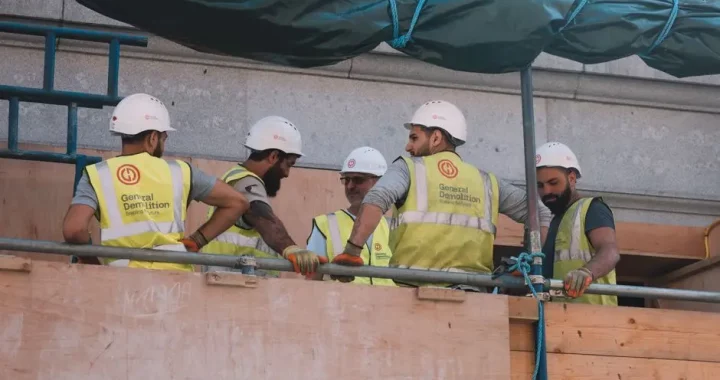
Construction workers in orange uniforms working on a street excavation in NYC.

Assess Your Coverage Needs

Before you can effectively lower your insurance costs, it’s essential to assess what coverage you actually need. Review your policies and evaluate if there are any areas where you might be over-insured or carrying unnecessary coverage.

Understanding the specifics of your operations is crucial. Does your work require certain liabilities that your current policy doesn’t cover, or are there coverages you pay for but rarely, if ever, need? Comprehending these aspects can help you tailor your insurance to your unique business needs, potentially eliminating redundant costs.

Shop Around for Better Rates

Don’t settle for the first insurance quote you receive. Take the time to shop around and compare different insurance providers. Look for insurers who specialize in coverage for contractors and offer competitive rates.

With numerous options available in the bustling NYC market, it’s worthwhile to research and explore various providers. Comparing policies not only helps identify better rates but also offers insight into additional benefits that different insurers might offer, such as premium flexibility or customer service options that suit your business style.

Some insurance broker resources available specifically cater to the contractor’s market, including specialized brokerages that offer insights into industry-specific risks and cost savings.

Bundle Your Insurance Policies

Many insurers offer discounts if you bundle multiple types of insurance, such as general liability and workers’ compensation. Consider consolidating your policies with one provider to take advantage of these savings.

Bundling can be a savvy move, especially for businesses that require multiple types of coverage. This strategy not only saves money but also simplifies policy management, reducing the administrative burden associated with handling insurance documents from multiple providers.

Implement Safety Measures

Insurance companies often reward businesses with lower premiums for maintaining a safe work environment. Implementing safety protocols and providing regular training to employees can help reduce your insurance costs.

Consider investing in workplace safety programs that focus on risk management. These programs not only protect your employees but also demonstrate to insurers your proactive approach to preventing incidents. A well-documented safety record can be a significant advantage during insurance evaluations, potentially leading to lower premiums.

Review and Update Regularly

As your business grows or changes, your insurance needs may evolve as well. Regularly reviewing and updating your insurance policies ensures you are not overpaying for coverage or missing out on potential savings.

Staying alert to changes in the contracting industry, as well as shifts in your business scale or scope, is vital. Regular assessments allow you to adjust coverages that no longer fit your operations due to expansions or contractions, thereby ensuring your insurance is both cost-effective and comprehensive.

Achieving Affordable Insurance Solutions

Reducing your insurance costs as a contractor in NYC is indeed possible with the right strategies in place. By reassessing your coverage needs, exploring different providers, and implementing safety measures, you can enjoy comprehensive coverage without breaking the bank.

About BGES Group

Running a business is challenging enough without having to spend valuable time dealing with insurance issues. At BGES Group, we make insurance simple by providing responsive, personalized service and helping you secure the right coverage at competitive rates. With more than 45 years of industry experience and access to over 25 top-rated insurance carriers, we take the time to understand your business and design insurance solutions that protect your company, employees, assets, and future—without paying for coverage you don’t need.

Our clients appreciate having one dedicated insurance professional, fast certificate processing, prompt answers, and direct access to a real person when they call. We proactively solve problems before they become costly, help control insurance expenses, and provide expert guidance on Workers’ Compensation, General Liability, Commercial Auto, Umbrella Liability, and other business insurance needs. Our goal is simple: make insurance one less thing for you to worry about while providing the peace of mind that comes from knowing an experienced professional is looking out for your business.

Contact BGES Group Insurance Services

Gary Wallach, President
Licensed in New York, New Jersey & Connecticut

📞 (914) 806-5853
✉️ bgesgroup@gmail.com
🌐 www.bgesgroup.com


The Million-Dollar Risk: Why Every New York Contractor Must Understand Labor Law 240 and 241

If you are a contractor, subcontractor, property owner, or developer operating in New York, there is one legal reality you cannot afford to ignore: New York Labor Law §§240 and 241. These laws have created some of the largest construction injury verdicts and insurance claims in the country and continue to shape virtually every aspect of construction liability insurance in New York. Understanding these laws isn’t simply good business practice—it can mean the difference between staying in business and facing a devastating financial loss. (Justia⁠)

The Law That Makes New York Different

New York Labor Law §240, commonly known as the “Scaffold Law,” was originally enacted in 1885 to protect construction workers from gravity-related injuries. Today, it remains unique because New York is the only state in the nation that imposes what is commonly referred to as “absolute” or “strict” liability on property owners and contractors for many elevation-related accidents. (LegalClarity⁠)

What does this mean in practical terms?

If a worker falls from a ladder, scaffold, roof, lift, or elevated platform—or if a worker is struck by a falling object—owners and contractors may be held fully responsible, even if they exercised reasonable care and even if the worker contributed to the accident. Unlike most states, comparative negligence often provides little or no protection in these cases. (LegalClarity⁠)

For contractors, this creates one of the most challenging liability environments anywhere in the United States.

What Exactly Does Labor Law 240 Cover?

Labor Law 240 applies to workers engaged in:

  • Construction
  • Demolition
  • Repair work
  • Alteration
  • Painting
  • Cleaning
  • Pointing of buildings and structures

The law requires owners and contractors to provide proper safety devices, including:

  • Scaffolds
  • Ladders
  • Hoists
  • Safety harnesses
  • Ropes
  • Braces
  • Slings
  • Fall protection systems
  • Other protective equipment necessary to protect workers from gravity-related hazards (Justia⁠)

Common claims that trigger Labor Law 240 include:

  • Falls from ladders
  • Falls from scaffolds
  • Falls from roofs
  • Falls into excavations
  • Injuries caused by falling tools
  • Injuries caused by falling construction materials
  • Scaffold collapses
  • Lift and hoist accidents (BGES Insurance⁠)

Labor Law 241: The Hidden Companion Risk

While Labor Law 240 receives most of the attention, Labor Law 241 presents another substantial exposure for contractors and property owners.

Labor Law 241 requires owners and contractors to provide reasonable and adequate protection and safety for workers on construction sites and references hundreds of specific provisions contained within New York’s Industrial Code. Violations of these regulations can result in substantial liability claims, even when no Labor Law 240 claim exists. (Reddit⁠)

Examples include:

  • Unsafe excavation practices
  • Improper housekeeping
  • Defective barriers
  • Inadequate lighting
  • Unsafe equipment operation
  • Failure to comply with specific construction safety regulations

A single construction accident can trigger claims under Labor Law 200, Labor Law 240, Labor Law 241, OSHA regulations, workers compensation laws, and contractual indemnification provisions simultaneously.

Why Insurance Costs Are So High in New York

Many contractors wonder why their general liability premiums are substantially higher than contractors operating elsewhere in the country.

The answer is simple: Labor Law claims produce some of the most severe losses in the insurance industry. Because owners and contractors can face full liability for catastrophic injuries, insurers must price their policies accordingly. (Times Union⁠)

A serious Labor Law claim can involve:

  • Multiple surgeries
  • Permanent disability
  • Lifetime medical care
  • Lost wages
  • Pain and suffering awards
  • Multi-million-dollar settlements or verdicts

As a result, insurance carriers frequently impose:

  • Height restrictions
  • Labor Law exclusions
  • Residential construction exclusions
  • Employee injury exclusions
  • Action-over exclusions
  • Subcontractor limitations

Many contractors do not discover these restrictions until after a claim occurs.

The “Action Over” Problem

One of the most misunderstood risks facing New York contractors is the “action over” claim.

Here’s how it works:

A worker is injured and receives workers compensation benefits. The worker then sues the property owner and general contractor under Labor Law 240 or 241. The property owner and general contractor subsequently file a lawsuit against the employer-contractor seeking indemnification.

Suddenly, a workers compensation claim becomes a multi-million-dollar liability lawsuit involving multiple parties and insurance policies. (YouTube⁠)

Without the proper insurance structure, this scenario can threaten the financial survival of a construction company.

Why Buying Cheap Insurance Can Be Dangerous

In today’s competitive market, contractors are understandably focused on price. However, selecting coverage based solely on premium can create enormous problems.

Questions every New York contractor should ask include:

  • Does my policy cover Labor Law claims?
  • Are there employee injury exclusions?
  • Are there action-over exclusions?
  • What height limitations apply?
  • Is residential work excluded?
  • Do I have sufficient umbrella coverage?
  • Are my subcontractors properly insured?
  • Do my additional insured endorsements satisfy contract requirements?

The cheapest policy is often the most expensive mistake.

Protecting Your Business

The best defense against Labor Law exposure is a combination of:

  • Strong safety practices
  • Proper contracts
  • Effective risk transfer
  • Experienced legal counsel
  • Comprehensive insurance coverage
  • Knowledgeable insurance representation

Contractors operating in New York need brokers who understand the complex interaction between Labor Law liability, workers compensation, contractual indemnification, additional insured requirements, and excess liability coverage.

About BGES Group

At BGES Group, we specialize in helping New York contractors navigate one of the most difficult insurance environments in America.

For more than 45 years, owner Gary Wallach has worked with contractors throughout New York, New Jersey, and Connecticut, helping construction businesses secure comprehensive protection while controlling insurance costs.

We specialize in:

  • General Liability Insurance
  • Workers Compensation Insurance
  • Excess and Umbrella Liability
  • Labor Law Coverage Analysis
  • Contractor Package Policies
  • Commercial Auto Insurance
  • Builders Risk Insurance
  • Additional Insured Requirements
  • Risk Transfer and Contract Review Assistance
  • Specialized Programs for New York Contractors

As a boutique agency, we provide personalized service that larger agencies often cannot match. Certificates are frequently issued within minutes, and when problems arise, you’ll speak directly with experienced professionals who understand New York construction insurance.

If you are a contractor, subcontractor, developer, or property owner operating in New York, we would welcome the opportunity to review your current insurance program and identify potential gaps in coverage.

Gary Wallach
BGES Group
Phone: 914-806-5853
Email: bgesgroup@gmail.com
Website: www.bgesgroup.com

Important Financial and Informational Disclaimer

This article is provided for general informational and educational purposes only and does not constitute legal, insurance, financial, or risk management advice. Labor Law exposures and insurance coverage vary significantly depending upon the facts, contracts, policy forms, endorsements, and applicable law. Readers should consult qualified legal counsel and licensed insurance professionals regarding their specific circumstances. Coverage availability, terms, conditions, exclusions, and pricing vary by insurer and jurisdiction. No guarantee of coverage or future results is expressed or implied.

Additional Insured Endorsements: The Insurance Requirement That Can Make or Break a New York Construction Contract

In the world of New York construction, contractors spend enormous amounts of time focusing on project costs, labor, materials, scheduling, and safety. Yet one of the most important factors determining whether a contractor survives a lawsuit or faces financial disaster is often buried deep within the insurance policy itself: the additional insured endorsement.

To many contractors, the phrase “additional insured” sounds like just another piece of paperwork required before work begins. A certificate gets issued, a contract gets signed, and everyone moves on.

Unfortunately, this misunderstanding has contributed to countless insurance disputes, denied claims, breach of contract allegations, and multi-million-dollar lawsuits.

In New York’s complex construction environment, additional insured endorsements are not simply administrative requirements—they are one of the most important risk transfer mechanisms available to contractors, property owners, and developers.

What Is an Additional Insured?

An additional insured is a person or organization added to another party’s insurance policy for liability protection arising out of the named insured’s operations.

In construction, this typically means:

  • A subcontractor adds the general contractor as an additional insured.
  • The subcontractor also adds the property owner.
  • The general contractor may add the project owner.
  • Multiple tiers of contractors may provide additional insured coverage to one another.

The purpose is simple: transfer risk away from the owner and upstream contractors to the party performing the work.

Without proper additional insured protection, every construction accident can become a financial battle involving multiple parties and multiple insurance companies.

Why Additional Insured Coverage Matters So Much in New York

No state presents greater liability challenges for construction businesses than New York.

New York Labor Laws Sections 240 and 241 create significant exposures for property owners and contractors. When an injury occurs, plaintiffs’ attorneys frequently sue everyone involved in the project, including:

  • Property owners
  • Developers
  • General contractors
  • Construction managers
  • Subcontractors
  • Equipment suppliers

Because of these risks, owners and general contractors require subcontractors to provide additional insured protection to shift liability exposure downstream.

Without these endorsements, project owners and general contractors could be forced to rely solely on their own insurance programs, substantially increasing their losses and premiums.

A Certificate of Insurance Is Not Insurance

One of the most common misconceptions in construction is that a certificate of insurance creates coverage.

It does not.

A certificate merely provides evidence that a policy exists. The actual coverage is determined by the insurance policy itself and, more importantly, by the endorsements attached to the policy.

Every year, contractors discover that:

  • The certificate was issued incorrectly.
  • The endorsement required by contract was never added.
  • Completed operations coverage was excluded.
  • The required wording was missing.
  • Coverage was more limited than expected.

When a serious claim occurs, these mistakes can become catastrophic.

The Most Common Additional Insured Endorsements

Several endorsements dominate the New York construction marketplace.

CG 20 10

The CG 20 10 endorsement provides additional insured coverage for liability arising out of ongoing operations performed by the named insured.

This endorsement protects owners and general contractors while construction work is actively being performed.

CG 20 37

The CG 20 37 endorsement extends additional insured coverage to completed operations.

This coverage is critical because many construction claims arise long after the project has been completed.

CG 20 33 and CG 20 38

These endorsements provide additional insured status when required by written contract and have become increasingly common among insurance carriers.

However, the specific language and scope of protection can vary significantly.

The Importance of Completed Operations Coverage

Many contractors mistakenly believe that once a project is completed, their liability exposure disappears.

Unfortunately, construction defect claims, injury claims, and property damage claims frequently emerge months or years after project completion.

Examples include:

  • Falling facade materials
  • Structural failures
  • Water intrusion
  • Electrical defects
  • Fire losses
  • Injuries caused by completed work

Without completed operations additional insured coverage, owners and general contractors may pursue indemnification directly against the contractor.

Primary and Non-Contributory Coverage

Another phrase appearing in virtually every New York construction contract is:

“Coverage shall be primary and non-contributory.”

What does this mean?

It means the contractor’s insurance policy must respond first before the owner’s or general contractor’s insurance contributes to the loss.

Without proper primary and non-contributory wording, disputes between insurance companies often arise, creating delays, legal expenses, and potential uninsured exposures.

Many contractors assume this wording is automatically included in their policies.

Often, it is not.

Contractual Requirements Matter

An additional insured endorsement is only part of the equation.

Construction contracts frequently require:

  • Specific additional insured forms
  • Written contracts executed before work begins
  • Primary and non-contributory wording
  • Waivers of subrogation
  • Completed operations coverage
  • Specific liability limits
  • Excess liability requirements

Failure to comply with these provisions can result in:

  • Breach of contract allegations
  • Loss of indemnification rights
  • Uninsured liability exposure
  • Payment disputes
  • Project delays

A contractor may believe they have complied with the contract, only to discover after a claim that critical requirements were overlooked.

The Action-Over Problem

Additional insured endorsements become especially important in New York action-over claims.

Consider this scenario:

A subcontractor’s employee falls from a scaffold and suffers catastrophic injuries.

The employee collects workers compensation benefits and then sues the property owner and general contractor under Labor Law Sections 240 and 241.

The owner and general contractor seek defense and indemnification under the subcontractor’s additional insured coverage.

If the additional insured endorsements are inadequate, missing, or improperly structured, the resulting litigation can cost millions of dollars.

This is not a rare occurrence.

It is one of the most common and expensive liability scenarios in New York construction.

The Cheapest Policy May Be the Most Expensive Mistake

In today’s competitive insurance marketplace, contractors often focus primarily on price.

However, many low-cost policies achieve their lower premiums through:

  • Restrictive additional insured endorsements
  • Labor Law exclusions
  • Height restrictions
  • Residential exclusions
  • Action-over exclusions
  • Limited completed operations coverage

A policy that saves several thousand dollars in premium can ultimately create millions of dollars in uninsured exposure.

Insurance should never be purchased solely based on price.

It should be purchased based on protection.

Experience Matters

The difference between a properly structured construction insurance program and an inadequate one often comes down to experience.

New York contractor insurance requires understanding:

  • Labor Law exposures
  • Contractual risk transfer
  • Additional insured requirements
  • Action-over claims
  • Umbrella liability structures
  • Workers compensation interactions
  • Excess liability coverage

The right insurance program can protect decades of hard work.

The wrong program can destroy it.

About BGES Group

At BGES Group, we specialize in helping New York contractors navigate the complex world of construction insurance and contractual risk transfer.

For more than 45 years, owner Gary Wallach has worked with contractors throughout New York, New Jersey, and Connecticut, helping businesses secure comprehensive protection while controlling insurance costs.

Our specialties include:

  • General Liability Insurance
  • Workers Compensation Insurance
  • Excess and Umbrella Liability
  • Additional Insured Requirements
  • Labor Law Exposure Analysis
  • Contract Review Assistance
  • Builder’s Risk Insurance
  • Commercial Auto Insurance
  • Contractor Package Policies
  • Risk Transfer Strategies
  • Specialized New York Contractor Insurance Programs

As a boutique insurance agency, we provide personalized service that many large agencies simply cannot match. We understand New York construction risks, issue certificates quickly, and work directly with contractors to identify hidden coverage gaps before claims occur.

If you are a contractor, subcontractor, property owner, or developer, we welcome the opportunity to review your insurance program and help ensure that your coverage protects both your business and your future.

Gary Wallach
BGES Group

Phone: 914-806-5853
Email: bgesgroup@gmail.com
Website: www.bgesgroup.com

Important Financial and Informational Disclaimer

This article is provided solely for informational and educational purposes and does not constitute legal, insurance, financial, tax, or risk management advice. Insurance coverages, policy forms, endorsements, contractual obligations, and legal liabilities vary significantly based upon individual circumstances, applicable law, and insurance carrier requirements. Readers should consult qualified legal counsel and licensed insurance professionals regarding their specific situations. No representation, warranty, or guarantee of coverage, legal outcome, or future results is expressed or implied.

Why Cheap General Liability Insurance Can Bankrupt a New York Contractor

In the highly competitive world of New York construction, every dollar matters. Contractors constantly face pressure to reduce costs, sharpen bids, and remain profitable in one of the most expensive construction markets in the country. When insurance renewal season arrives, many contractors naturally focus on one number above all others: premium.

Unfortunately, when it comes to New York contractor general liability insurance, buying the cheapest policy available can become one of the most expensive mistakes a contractor ever makes.

The difference between a properly structured general liability program and a bargain-basement policy may not become apparent until after a catastrophic accident occurs. By then, it is often too late. The result can be devastating lawsuits, denied claims, bankrupt businesses, and personal financial ruin.

New York Is Not Like Other States

Construction liability in New York is unique. Unlike virtually every other state, New York’s Labor Law Sections 240 and 241 create extraordinary legal exposures for contractors, subcontractors, property owners, and developers.

A worker falling from a ladder, scaffold, roof, or elevated work surface can trigger claims worth millions of dollars. Even contractors with excellent safety records can become defendants in major lawsuits simply because they were involved in the project.

Because of these risks, insurance companies carefully manage their exposure. Some carriers specialize in New York construction risks. Others simply try to avoid them by inserting exclusions and restrictions into their policies.

The problem is that many contractors never realize what coverage they have purchased until a claim occurs.

The Illusion of Cheap Insurance

Imagine two contractors receive quotes:

  • Contractor A pays $18,000 annually.
  • Contractor B pays $10,500 annually.

At first glance, Contractor B appears to have saved $7,500.

But what if Contractor B’s policy contains:

  • Labor Law exclusions
  • Height limitations
  • Residential construction exclusions
  • Employee injury exclusions
  • Action-over exclusions
  • Subcontractor warranty requirements
  • Designated operations exclusions

That $7,500 savings can quickly become a multi-million-dollar uncovered loss.

The cheapest policy is often only cheap because important protections have been removed.

Labor Law Exclusions: The Hidden Time Bomb

Perhaps the most dangerous exclusion found in some contractor policies is the Labor Law exclusion.

New York Labor Law claims represent some of the largest losses in the insurance industry. Because of this, certain carriers simply exclude them altogether.

Imagine this scenario:

A subcontractor employee falls from a scaffold and suffers permanent injuries. The employee sues the building owner and general contractor under Labor Law 240. The owner and general contractor then seek indemnification from your company.

You notify your insurance carrier.

The carrier responds:

“Coverage denied due to Labor Law exclusion.”

At that moment, the insurance policy you purchased to protect your business may provide little or no protection.

Height Restrictions Can Destroy Coverage

Many contractors are surprised to discover that their policy contains height restrictions.

Common limitations include:

  • No work above 10 feet
  • No work above 15 feet
  • No work above two stories
  • No roofing operations
  • No exterior work above certain elevations

The problem is obvious.

If your employee performs work outside the permitted height restriction—even briefly—the insurance company may argue that coverage does not apply.

A contractor may spend years paying premiums only to discover that the work actually being performed was excluded from coverage all along.

Residential Construction Exclusions

Residential construction remains one of the most challenging classes of business for insurance companies.

As a result, some policies contain exclusions for:

  • Single-family homes
  • Multi-family homes
  • Condominium projects
  • Apartment renovations
  • Mixed-use buildings
  • Residential conversions

Many contractors operate in both commercial and residential sectors without fully understanding the restrictions contained within their policies.

A contractor performing what appears to be a routine renovation project could unknowingly create a substantial uninsured exposure.

The Action-Over Problem

One of the most misunderstood exposures in New York construction is the “action-over” claim.

Here’s how it works:

Your employee is injured on a construction site.

Workers compensation pays benefits.

The injured worker then sues the property owner and general contractor under Labor Law 240 or 241.

The owner and general contractor then sue your company for indemnification.

What began as a workers compensation claim suddenly becomes a multi-million-dollar liability lawsuit.

Some policies specifically exclude these action-over claims.

Others provide limited protection.

Many contractors never ask the question.

Additional Insured Problems

Most New York construction contracts require contractors to provide additional insured status to owners and general contractors.

However, not all additional insured endorsements are created equal.

Common problems include:

  • Incorrect endorsements
  • Missing completed operations coverage
  • Failure to provide primary and non-contributory wording
  • Restrictive contractual requirements
  • Insufficient limits

A contractor who fails to provide the required additional insured coverage may find themselves in breach of contract and exposed to uninsured liability.

Excess Liability: The Missing Piece

Even contractors with excellent primary liability coverage often fail to purchase adequate excess or umbrella insurance.

In today’s legal environment, a $1 million general liability policy may be insufficient protection.

Serious Labor Law claims can easily exceed:

  • $2 million
  • $5 million
  • $10 million
  • $20 million or more

Excess liability coverage often represents the difference between surviving a catastrophic claim and losing everything.

Price Is Important—But Value Is Essential

Every contractor wants competitive pricing.

However, insurance should never be viewed simply as a commodity purchase.

The right questions are:

  • Does my policy cover Labor Law claims?
  • Are action-over claims covered?
  • What height restrictions apply?
  • Is residential work excluded?
  • Do I have sufficient umbrella coverage?
  • Are subcontractor requirements clearly defined?
  • Do my additional insured endorsements comply with contracts?
  • Has someone experienced reviewed my exposures?

The objective is not merely to buy insurance.

The objective is to transfer risk.

Experience Matters

New York contractor insurance is among the most specialized areas of commercial insurance.

A policy that appears identical on the declaration page may contain dramatically different coverage provisions.

The difference between adequate and inadequate coverage is often found in endorsements, exclusions, definitions, and contract requirements that many contractors never see.

That is why working with experienced New York construction insurance professionals can be one of the most important business decisions a contractor makes.

About BGES Group

At BGES Group, we specialize in helping contractors navigate the complex and often dangerous world of New York construction insurance.

For more than 45 years, owner Gary Wallach has helped contractors throughout New York, New Jersey, and Connecticut secure comprehensive insurance protection while managing costs and reducing risk.

We understand the unique challenges facing contractors, including:

  • New York Labor Law exposures
  • General Liability Insurance
  • Workers Compensation Insurance
  • Excess and Umbrella Liability
  • Contractor Package Policies
  • Commercial Auto Insurance
  • Builders Risk Insurance
  • Additional Insured Requirements
  • Contract Review Assistance
  • Risk Transfer Strategies
  • Specialized New York Contractor Programs

As a boutique agency, BGES Group provides personalized service, rapid certificate issuance, and direct access to experienced insurance professionals who understand New York construction risks.

Before renewing your insurance, allow us to review your current program and identify potential gaps that could place your business at risk.

Gary Wallach
BGES Group
Phone: 914-806-5853
Email: bgesgroup@gmail.com
Website: www.bgesgroup.com

Important Financial and Informational Disclaimer

This article is provided solely for informational and educational purposes and does not constitute legal, insurance, financial, tax, or risk management advice. Insurance coverages, exclusions, endorsements, policy terms, legal obligations, and Labor Law exposures vary substantially depending upon the specific facts, jurisdiction, policy forms, contractual requirements, and circumstances involved. Readers should consult qualified legal counsel and licensed insurance professionals regarding their particular situations. Coverage availability, underwriting requirements, pricing, and policy provisions vary among insurance carriers. No representation, warranty, or guarantee of coverage or future results is expressed or implied.

12 Common Contractor Liability Insurance Mistakes and How to Avoid Them

Navigating the world of contractor liability insurance can feel like a real puzzle. Many contractors make common mistakes that could end up costing them dearly. In this guide, we’ll delve into these pitfalls, and more importantly, show you how to steer clear of them to keep your business secure.

Two workers discussing plans on a sandy construction site, wearing safety gear.

1. Overlooking the Fine Print

It’s easy to gloss over the details in your insurance policy, but this could lead to gaps in coverage. Always take the time to read and understand every clause.

The fine print of any policy can often include critical exclusions or limitations that aren’t immediately apparent in the main document. For instance, some policies might not cover specific types of damages unless explicitly noted. Knowing what your policy does and doesn’t cover will help avoid unpleasant surprises when you file a claim.

Consider having your policy reviewed by a professional who understands the nuances of contractor liability insurance. They can spot potential issues and provide insights into whether your existing coverage aligns with your business needs. This nuanced understanding is especially important as your business evolves, potentially altering your insurance requirements.

2. Choosing Inadequate Coverage Levels

Underestimating the necessary coverage could leave you exposed. Assess your project needs carefully and match your coverage appropriately.

One frequent oversight is underinsuring based on cost-saving goals. However, selecting inadequate coverage might be more costly in the long run. Instead, it’s vital to assess the risks and liabilities associated with your projects comprehensively. For more insights on how to properly assess your coverage needs, seek professional advice and explore resources that guide on determining sufficient coverage levels.

3. Neglecting Regular Policy Reviews

As your business grows, your insurance needs may change. It’s important to review your policy annually to ensure your coverage remains suitable.

Failing to regularly review your insurance policy can lead to outdated coverage that doesn’t reflect your current operational risks. An annual policy review provides an opportunity to address changes in your business, industry regulations, or scaling activities, ensuring that your coverage remains adequate and relevant.

4. Contractor Classification Errors

Misclassifying the type of work you do can affect your premiums and coverage. Make sure your insurer has accurate information about your operations.

Contractor classification errors often stem from complex job descriptions that don’t neatly fit insurance categories. These misclassifications can result in either overpaying for coverage or, worse, finding yourself inadequately protected. Educate yourself on common classification errors and better understand your specific contracting classifications to ensure accuracy and minimize risk.

5. Misunderstanding Policy Exclusions

Certain damages might not be covered by your policy. Knowing what’s excluded is crucial to avoiding unexpected costs.

Insurance exclusions are like hidden traps that can catch you off guard if not thoroughly understood. These exclusions might pertain to specific types of work or circumstances not covered by your plan. Review these exclusions regularly and adjust your coverage to fill any gaps, thereby mitigating the potential for financial fallout from uncovered claims.

6. Failure to Report Claims Promptly

Delays in reporting claims can complicate the process and possibly invalidate coverage. Report any incidents as soon as they occur.

Insurers often have strict timelines for claim reporting, and failing to adhere can result in denial of coverage. Prompt notification of claims gives your insurer the information needed to investigate and settle the claim quickly and fairly. This proactive approach minimizes disruption to your business operations and demonstrates responsible risk management.

7. Ignoring Certificates of Insurance

It’s vital to issue and ask for certificates of insurance. They act as proof of coverage and help manage risk during contracts.

Certificates of insurance are critical, not just as proof of coverage, but as tools for confirming that all parties in a contract are adequately insured. This documentation guards against unexpected liabilities, ensuring that you are not inadvertently taking on more risk than agreed. Always request updated certificates with each new contract or project.

8. Inaccurate Payroll Reporting

Your insurance premiums may depend on your reported payrolls. Inaccuracies can lead to higher costs or inadequate coverage.

Insurance premiums are often calculated based on payroll estimates, and discrepancies can lead to financial deficits. Misreporting can prompt audits and adjustments, impacting your financial planning. Ensure precise payroll reporting by working closely with your accounting team to align payroll data and insurance needs accurately.

9. Failing to Secure Subcontractor Coverage

If subcontractors aren’t covered under your policy, you could be left vulnerable. Ensure they carry their own insurance or are included under your policy.

When subcontractors operate without adequate insurance, any incidents or damages could fall back on you. Securing proof of coverage from your subcontractors or making sure they’re included in your policy protects you from unexpected liabilities.

10. Underreporting Project Values

Beware of underestimating project values, as this can result in insufficient coverage. Ensure all project-related expenses are accounted for.

Underreporting project values might seem like a way to save on premiums, but it often results in insufficient coverage when it’s most needed. Ensure accurate estimations of project costs and values to secure adequate coverage and protect your business financially.

11. Lack of Emergency Planning

Having a plan for emergencies can mitigate risks. Make sure your insurance policy fits into your broader emergency response strategy.

Establishing an emergency response plan that complements your insurance policy can save your business from severe setbacks. Ensuring these plans align and provide adequate coverage in the event of disruptions helps maintain business continuity and safety during unexpected events.

12. Forgetting About Industry Changes

Industry standards and regulations change over time. Stay informed and adjust your coverage to stay compliant and protected.

It’s crucial to stay abreast of industry changes that might necessitate insurance policy updates. Regularly monitor regulatory updates and industry trends, and adjust your coverage accordingly to maintain compliance and comprehensive protection for your business.

About BGES Group

Running a business is challenging enough without having to spend valuable time dealing with insurance issues. At BGES Group, we make insurance simple by providing responsive, personalized service and helping you secure the right coverage at competitive rates. With more than 45 years of industry experience and access to over 25 top-rated insurance carriers, we take the time to understand your business and design insurance solutions that protect your company, employees, assets, and future—without paying for coverage you don’t need.

Our clients appreciate having one dedicated insurance professional, fast certificate processing, prompt answers, and direct access to a real person when they call. We proactively solve problems before they become costly, help control insurance expenses, and provide expert guidance on Workers’ Compensation, General Liability, Commercial Auto, Umbrella Liability, and other business insurance needs. Our goal is simple: make insurance one less thing for you to worry about while providing the peace of mind that comes from knowing an experienced professional is looking out for your business.

Contact BGES Group Insurance Services

Gary Wallach, President
Licensed in New York, New Jersey & Connecticut

📞 (914) 806-5853
✉️ bgesgroup@gmail.com
🌐 www.bgesgroup.com


Understanding Excavation Insurance in New York: What Contractors Need to Know

Navigating the complex world of insurance can be daunting, especially when it comes to niche areas like excavation insurance. For contractors in New York, understanding the nuances of excavation insurance is crucial for both legal compliance and the safeguarding of their business. This blog aims to break down the essentials of excavation insurance, shedding light on its importance, coverage details, and how contractors can make informed decisions.

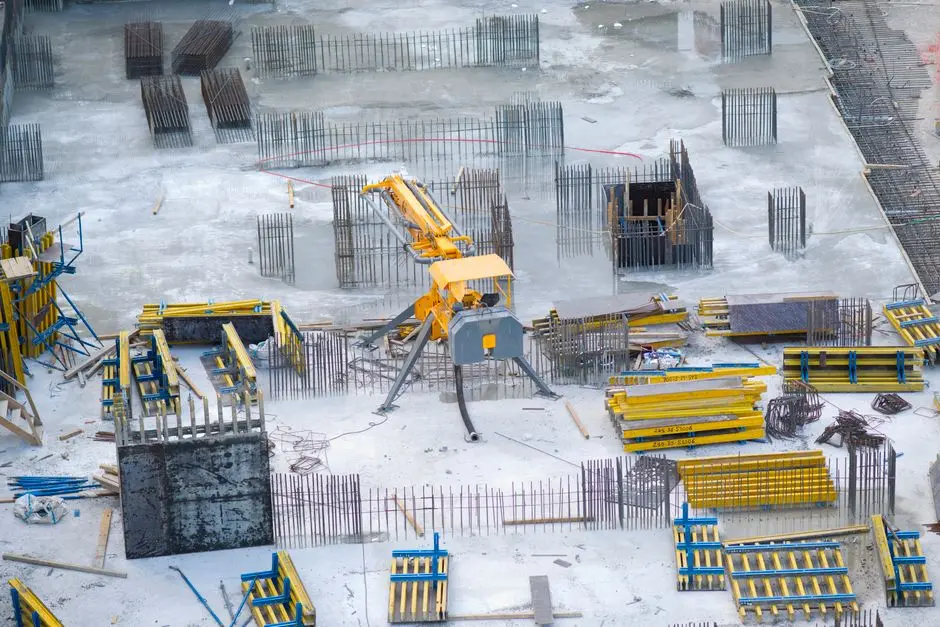
Aerial view of an active construction site with heavy machinery and building materials.

What is Excavation Insurance?

Excavation insurance is a specialized form of coverage designed to protect contractors involved in digging and related activities. This type of insurance covers a spectrum of risks that are uniquely associated with excavation work, ranging from accidental damage to nearby properties to more serious incidents like injury or environmental contamination. For many contractors, especially in bustling urban areas such as New York, this insurance serves not just as a financial safety net but also as a key component of their operational strategy. By investing in excavation insurance, contractors can safeguard their projects, their reputation, and ultimately, their bottom line from unforeseen liabilities.

Understanding the specific inclusions of excavation insurance is vital for contractors. For example, it can provide protection against claims resulting from soil erosion, which can affect neighboring properties or public lands. It can also cover equipment malfunctions that might lead to project delays or additional costs. In essence, excavation insurance aims to provide peace of mind by mitigating risks that could otherwise cause substantial financial strain. The nature of excavation work is inherently risky, making this insurance a crucial aspect of risk management for contractors. It’s not only about meeting legal obligations but also about maintaining a proactive approach to potential issues.

Why is Excavation Insurance Important in New York?

Given New York’s dense infrastructure and frequent construction, excavation projects carry significant risks. Insurance provides financial protection against potential liabilities, helping contractors avoid costly legal battles and maintain compliance with state regulations. The urban landscape of New York is characterized by its complex layers of infrastructure beneath the surface. From utility lines to subway systems, the intricacies of what lies beneath create unique challenges for excavation projects. As a result, any excavation activity comes with inherent risks of disrupting these systems, which could lead to significant financial and legal repercussions for contractors.

Moreover, New York’s strict regulatory environment requires contractors to ensure their operations comply with both city and state safety standards. Excavation insurance not only offers a safety net but also reinforces a contractor’s credibility in this highly competitive field. By having comprehensive excavation insurance in place, contractors demonstrate their commitment to safeguarding their projects and the community they work in. This is particularly essential when dealing with public sector projects or contracts with stringent safety and legal stipulations. Essentially, excavation insurance acts as a tool to help contractors stay compliant while also managing the financial risks linked to excavation work.

Another crucial aspect is the coverage against lawsuits stemming from incidents that might occur on-site. In a litigious environment like New York, the ability to defend against claims involving property damage or personal injury is paramount for contractors. Without excavation insurance, facing such lawsuits could potentially end the business. Therefore, investing in the right insurance policy is not only a wise financial decision but also a strategic move to ensure the long-term sustainability of one’s contracting business.

Key Components of Excavation Insurance Coverage

Typical coverage areas include third-party injuries, equipment damage, and environmental impacts. Understanding these components helps contractors choose policies that best suit their project needs. Third-party injury coverage is essential, as excavation sites are prone to accidents involving non-workers. This can range from falling debris to unexpected collapses, any of which could result in significant medical expenses and liability claims. Proper coverage ensures that contractors aren’t left vulnerable to such unforeseen events.

Equipment is another critical facet of excavation projects. Construction machinery is a significant investment, and any damage to such equipment can lead to downtime and added costs. Excavation insurance typically covers repair and replacement costs, allowing projects to continue with minimal disruption. Meanwhile, environmental impact coverage addresses potential contamination issues such as fuel leaks or soil displacement that could damage the local ecosystem. This aspect of the coverage is particularly important in heavily regulated areas like New York, where environmental standards are stringent.

Choosing a policy with robust coverage options can help contractors not only adhere to regulatory requirements but also present a more professional image to potential clients. By having comprehensive coverage, contractors demonstrate their preparedness and responsibility in handling the complexities of excavation work. This can set them apart in a competitive market where safety and reliability are top concerns for project stakeholders.

Factors Affecting Excavation Insurance Costs

Various factors such as project size, site location, and contractor experience can influence insurance premiums. Awareness of these factors allows for better budgeting and policy selection. Larger projects often naturally incur higher insurance costs due to the scale and scope of potential risks involved. Likewise, a contractor’s track record can also impact premium rates. Experienced contractors with a history of safe practices may be eligible for more favorable terms.

Site location is another significant determinant. Projects located in more congested urban areas, such as the heart of Manhattan, often present greater risks and thus, higher insurance costs. Conversely, sites in less populated suburbs might attract lower premiums. Understanding these variations helps contractors anticipate potential financial outlays and adjust their project proposals accordingly. It’s also important for contractors to keep abreast of market shifts and regulatory changes that might impact overall insurance rate structures.

Additionally, other factors like the specific nature of the excavation project — whether it’s foundational, trenching, or tunneling work — can affect costs. Each type of excavation brings its own set of risks, influencing the insurance needs and consequently, the investment required. By consulting with industry experts and using insurance calculators, contractors can gain a clearer picture of potential expenses, aiding in better preparation and control over their financial planning.

Choosing the Right Insurance Provider

Partnering with a reliable insurance provider is crucial. Contractors should consider the provider’s reputation, customer service, and ability to offer tailored solutions for specific project requirements. Reputation can often be gauged through reviews and ratings from other contractors and industry experts, serving as valuable indicators of an insurer’s reliability and financial stability. Moreover, a provider renowned for efficient claims processing can significantly reduce stress during times of need.

Customer service is equally important. An insurance provider that offers excellent support can help clarify policy details, ensuring contractors fully understand their coverage. This is particularly beneficial when assessing complex requirements associated with large or technically challenging projects. Providers that regularly update their clients on regulatory changes and offer consultation on new policy options add tremendous value, enabling contractors to stay informed and prepared.

Additionally, an ideal provider would offer flexible policy options that can be customized to fit the unique demands of each project. This is critical as project specifications and risks can vary greatly, even among projects that are similar in size or scope. Tailored solutions ensure that contractors only pay for the coverage they need, optimizing costs while maintaining adequate protection. As the final decision on choosing an insurance provider will significantly impact a contractor’s peace of mind and financial security, due diligence is essential.

Securing the Foundation of Your Excavation Projects

In the bustling construction landscape of New York, excavation insurance is not just a requirement; it’s a safeguard for your business’s future. By understanding the ins and outs of coverage and risk management, contractors can protect themselves from unexpected setbacks. Taking the time to familiarize yourself with the insurance landscape will ensure that your projects proceed smoothly and safely, cultivating a strong foundation for your business.

About BGES Group

Running a business is challenging enough without having to spend valuable time dealing with insurance issues. At BGES Group, we make insurance simple by providing responsive, personalized service and helping you secure the right coverage at competitive rates. With more than 45 years of industry experience and access to over 25 top-rated insurance carriers, we take the time to understand your business and design insurance solutions that protect your company, employees, assets, and future—without paying for coverage you don’t need.

Our clients appreciate having one dedicated insurance professional, fast certificate processing, prompt answers, and direct access to a real person when they call. We proactively solve problems before they become costly, help control insurance expenses, and provide expert guidance on Workers’ Compensation, General Liability, Commercial Auto, Umbrella Liability, and other business insurance needs. Our goal is simple: make insurance one less thing for you to worry about while providing the peace of mind that comes from knowing an experienced professional is looking out for your business.

Contact BGES Group Insurance Services

Gary Wallach, President
Licensed in New York, New Jersey & Connecticut

📞 (914) 806-5853
✉️ bgesgroup@gmail.com
🌐 www.bgesgroup.com


7 Essential Insurance Tips for New York Contractors Facing Labor Law Risks

Navigating the labyrinth of insurance as a New York contractor can be daunting, especially when dealing with labor law risks. The right insurance coverage is crucial for protecting your business from potential pitfalls. In this guide, we’ll explore some essential tips for managing insurance effectively, ensuring you have the protection necessary for peace of mind.

Group of construction workers in safety gear collaborating at a city construction site.

1. Understanding Contractors Liability Insurance

Contractors liability insurance is foundational for protecting your business from claims of injury or damage. In New York, where labor laws are stringent, having comprehensive coverage can protect you against costly legal battles. Ensure your policy covers bodily injury, property damage, and any legal defense costs. Reliable coverage helps prevent a financial burden from unexpected incidents.

Understanding the specifics of your coverage is just as important. New York’s laws often require higher minimums due to the dense and urban nature of the work environments. Familiarize yourself with these requirements and make sure your policy reflects these necessities. A proactive approach can help manage risks more effectively, saving you from potential headaches down the line.

2. Evaluating Workers’ Compensation Policies

Workers’ compensation insurance is not just mandatory; it’s a necessity for peace of mind. It covers medical expenses and lost wages if an employee is injured, preventing costly lawsuits under labor law. Evaluate your policy regularly to ensure it meets state requirements and adequately covers your workforce. Understanding the scope of coverage can prevent unpleasant surprises.

Furthermore, reviewing your claims history can provide insights into recurring issues or areas that need addressing within your safety protocols. A thorough analysis helps in modifying policies to cover potential new risks, ensuring that both your business and your employees remain protected against various contingencies.

3. Assessing the Need for Additional Coverage

Beyond basic liability and workers’ compensation, consider additional coverage like umbrella insurance, which offers extra liability protection. This can be particularly useful in high-risk industries where labor law claims may exceed standard coverage limits. A broader safety net can mitigate risks that aren’t typically included in standard policies.

Moreover, specific endorsements or riders can be vital in areas prone to natural disasters or unexpected events that might disrupt business operations. Taking the time to work with your insurer to assess unique risks ensures a custom-fit solution safeguarding your business comprehensively.

4. Navigating Contractual Obligations

Contracts often outline specific insurance requirements for contractors. Understanding these obligations is crucial to avoid breaches that could lead to penalties or the voiding of insurance protections. Consult with a legal expert to ensure all contractual terms are met, which protects against potentially costly misunderstandings.

Each project may present unique requirements. By ensuring compliance with these specifics, not only do you protect your interests, but you also build credibility with clients and partners, a vital asset in the competitive New York market.

5. Keeping Up with Changes in Labor Laws

Labor laws are subject to change, and staying informed is essential to maintaining compliance. Regularly review updates from New York labor boards and consult with your insurance provider to adjust your coverage accordingly, protecting your business from unexpected liabilities. A nuanced understanding of these laws can significantly impact your coverage needs.

Subscribing to newsletters or joining industry groups can also provide timely updates and interpretations of new laws. Engaging with a network of professionals helps ensure your business isn’t caught off guard by unexpected legal shifts.

6. Developing a Risk Management Strategy

Identify potential risks within your operations and develop a comprehensive risk management strategy. This proactive approach can reduce the chances of incidents and, subsequently, claims that could impact your business financially. A well-structured plan helps create a culture of safety and preparedness among employees.

Consider implementing regular training and revisions of safety protocols as part of your strategy. Emphasizing a proactive stance promotes long-term success and resilience in the face of potential disruptions, ensuring continuity in operations.

7. Selecting the Right Insurance Provider

Choosing an insurance provider experienced in dealing with New York contractors is crucial. They should understand the local labor laws and offer tailored policies that meet your specific needs. Look for providers with a solid reputation and comprehensive support services, which can facilitate easier negotiation of complex coverages.

It’s also beneficial to seek providers who offer clear communication and a commitment to swift claim processing. These features ensure that when the unexpected occurs, your business can return to normal operations as quickly as possible, minimizing downtime and disruption.

About BGES Group

Running a business is challenging enough without having to spend valuable time dealing with insurance issues. At BGES Group, we make insurance simple by providing responsive, personalized service and helping you secure the right coverage at competitive rates. With more than 45 years of industry experience and access to over 25 top-rated insurance carriers, we take the time to understand your business and design insurance solutions that protect your company, employees, assets, and future—without paying for coverage you don’t need.

Our clients appreciate having one dedicated insurance professional, fast certificate processing, prompt answers, and direct access to a real person when they call. We proactively solve problems before they become costly, help control insurance expenses, and provide expert guidance on Workers’ Compensation, General Liability, Commercial Auto, Umbrella Liability, and other business insurance needs. Our goal is simple: make insurance one less thing for you to worry about while providing the peace of mind that comes from knowing an experienced professional is looking out for your business.

Contact BGES Group Insurance Services

Gary Wallach, President
Licensed in New York, New Jersey & Connecticut

📞 (914) 806-5853
✉️ bgesgroup@gmail.com
🌐 www.bgesgroup.com