Understanding Scaffolding Insurance: A Contractor’s Guide

Navigating the world of insurance can be daunting, especially for contractors who are dealing with unique risks every day. One important aspect of coverage often overlooked is scaffolding insurance. In this guide, we’ll break down what scaffolding insurance is, why it’s vital for your business, and how to choose the right policy to keep your projects protected.
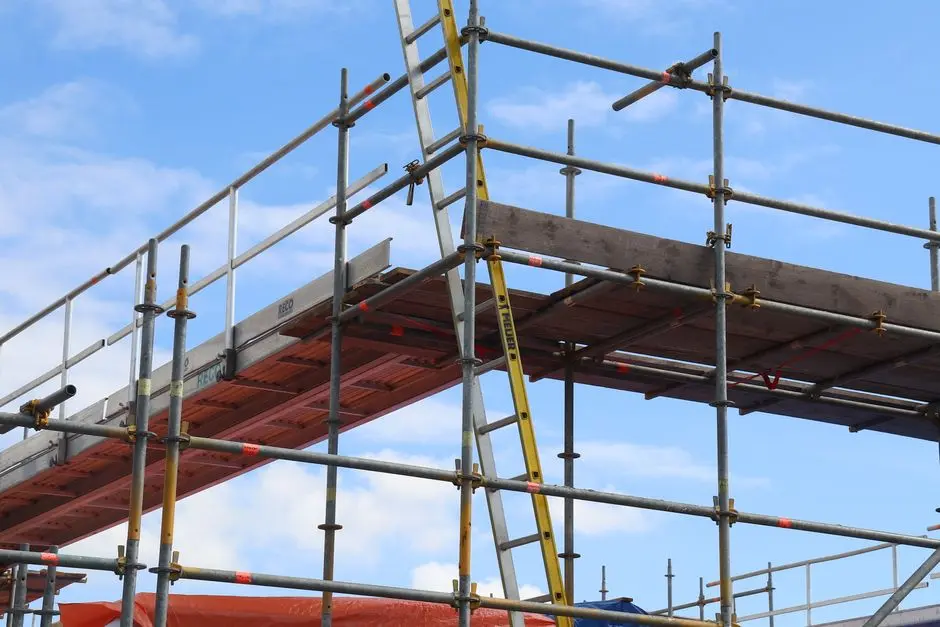
Detailed view of a construction site scaffolding structure and ladder against a bright blue sky.

What is Scaffolding Insurance?

Scaffolding insurance is specialized coverage tailored for businesses involved in scaffolding work. It encompasses various risks associated with erecting and dismantling scaffolding, ensuring that contractors are protected against potential accidents or damages.

Scaffolding is a fundamental component of many construction projects, providing the necessary height and support for workers. However, with its advantages come certain risks. As scaffolding structures can vary in complexity and size, they present specific challenges. Scaffolding insurance is designed to mitigate these risks by offering comprehensive coverage that protects against potential legal liabilities and losses. It’s essential for contractors to understand how scaffolding safety standards evolve and how policies can adapt to these changes, ensuring ongoing compliance and protection.

Beyond the general understanding of scaffolding insurance, it’s crucial to delve into what it truly means for contractors. This coverage isn’t just about ticking a box; it’s about safeguarding the future of your business. From unexpected structural failures to accidental damage caused near or on scaffolding, having a well-rounded insurance policy ensures peace of mind. It’s this kind of specialized insurance that allows you to focus on your primary business operations, knowing you’re protected against the nuances of scaffolding liabilities.

The Importance of Scaffolding Insurance for Contractors

In the construction industry, scaffolding plays a critical role, but it also introduces unique hazards. Scaffolding insurance provides essential protection for your business, mitigating the risks of liability from accidents, property damage, or even worker injuries.

Scaffolding is more than just a temporary structure; it is a lifeline for many construction projects, providing access and safety for workers performing tasks at various heights. However, the inherent risks that come with scaffolding cannot be overlooked. Accidents can lead to severe injuries, resulting in costly medical bills and legal fees. By investing in scaffolding insurance, contractors not only protect their financial interests but also demonstrate a commitment to the safety and well-being of their employees. It’s a strategic move that underscores the importance of risk management across the project lifespan.

Moreover, scaffolding insurance is an essential aspect of comprehensive construction risk management. It creates a safety net that allows contractors to navigate unforeseen challenges without the fear of detrimental financial impacts. In essence, this insurance is an investment in the reliability and credibility of your construction firm, offering clients added reassurance which can distinguish your business in a competitive market.

Key Coverage Areas of Scaffolding Insurance

A typical scaffolding insurance policy covers several areas including public liability, employer’s liability, and coverage for equipment damage. Understanding these coverage areas helps in selecting a policy that best meets the needs of your business.

Public liability coverage is essential for protecting against claims of injury or damage caused by your scaffolding operations to third parties. This aspect of the insurance ensures you can address any legal claims without the fear of jeopardizing your business finances. On the other hand, employer’s liability coverage is compulsory, protecting you against claims from employees who might suffer injury or illness as a result of their work. It’s vital to clearly understand how each of these areas impacts your overall business risk profile and operations.

Additionally, equipment damage coverage protects against the costs associated with repairing or replacing damaged scaffolding. Issues such as adverse weather conditions or accidental damage during handling are unpredictable, but if covered by insurance, they don’t have to be financially debilitating. To build a comprehensive safety net, consider these coverage areas in piecing together a robust business protection strategy that aligns perfectly with your operational needs.

How to Choose the Right Scaffolding Insurance Policy

Choosing the right scaffolding insurance involves evaluating your business needs, assessing the risks specific to your operations, and comparing different insurers. Consider factors such as coverage limits, exclusions, and the insurer’s reputation.

Start by identifying the unique risks associated with your scaffolding projects. Every construction site is different, and understanding these specific risks can help tailor your insurance policy to offer maximum coverage. Next, compare the offerings of various insurers. Look into their reputations, customer service quality, and reviews from other contractors. It’s about finding more than just a policy; it’s about forming a partnership with a provider that understands the intricacies of your industry and can respond adeptly to claims when needed.

Additionally, don’t overlook the importance of reviewing policy exclusions and endorsements. These can significantly affect your coverage. Customization is key—while some standardized policies may seem easier to manage, adjusting them to better reflect your business’s operations and risks often results in better security and potentially lower costs over time.

Tips for Lowering Your Scaffolding Insurance Premiums

Reducing insurance costs without sacrificing coverage can significantly benefit your bottom line. Implementing safety measures, maintaining rigorous safety training, and having a good claims history are effective ways to lower your premiums.

One practical approach to reducing premiums is to enhance the safety protocols on your site. Regular safety audits and compliance checks can significantly minimize risk and, in turn, premiums. Investing in quality materials for scaffolding and ensuring all equipment undergoes regular inspections not only offers peace of mind but also demonstrates a commitment to high safety standards, often rewarded by insurers.

Another strategy is bundling your insurance policies. Many insurers offer discounts for businesses that purchase multiple types of coverage. By consolidating your insurance needs with one provider, you may benefit from lower premiums and have a single point of contact for all your insurance needs. Also, consider raising deductibles carefully; while this reduces the premium, make sure it’s within a manageable range so as not to strain your resources in case of a claim.

Securing Your Construction Future with Scaffolding Insurance

Scaffolding insurance is not just an optional extra; it’s a crucial component of risk management for contractors. By understanding the essentials and selecting the right coverage, you can safeguard your business, protect your team, and ensure a smoother operation on-site. Don’t leave your business vulnerable—invest in the right scaffolding insurance today to build a more secure future. For more information on how we can assist you in securing your business’s future, visit our homepage.

About BGES Group

Running a business is challenging enough without having to spend valuable time dealing with insurance issues. At BGES Group, we make insurance simple by providing responsive, personalized service and helping you secure the right coverage at competitive rates. With more than 45 years of industry experience and access to over 25 top-rated insurance carriers, we take the time to understand your business and design insurance solutions that protect your company, employees, assets, and future—without paying for coverage you don’t need.

Our clients appreciate having one dedicated insurance professional, fast certificate processing, prompt answers, and direct access to a real person when they call. We proactively solve problems before they become costly, help control insurance expenses, and provide expert guidance on Workers’ Compensation, General Liability, Commercial Auto, Umbrella Liability, and other business insurance needs. Our goal is simple: make insurance one less thing for you to worry about while providing the peace of mind that comes from knowing an experienced professional is looking out for your business.

Contact BGES Group Insurance Services

Gary Wallach, President
Licensed in New York, New Jersey & Connecticut

📞 (914) 806-5853
✉️ bgesgroup@gmail.com
🌐 www.bgesgroup.com



When a Jobsite Injury Becomes a Lawsuit: New York Labor Law and Contractor Liability Insurance

New York contractors face more than the ordinary risks of construction. If a worker is injured, state Labor Law may allow claims against property owners, general contractors and other parties involved in a project—even when they did not directly supervise the work. The resulting lawsuit can raise questions about who is legally responsible and whether each party’s insurance policy will respond.

Understanding the connection between New York Labor Law and contractor liability insurance can help contractors ask better questions before a project starts and at renewal. The details depend on the facts of an accident, the contract and the policy wording, so contractors should review their situation with qualified legal and insurance professionals.

What Labor Law Sections 240 and 241 cover

New York Labor Law § 240(1) is commonly called the “Scaffold Law.” It addresses certain elevation-related hazards in activities such as construction, demolition, repair, alteration, painting, cleaning and pointing. The law requires covered owners, contractors and their agents to provide or arrange for specified safety devices—such as scaffolds, ladders, hoists and braces—to protect workers. It includes an exception for certain owners of one- and two-family homes who do not direct or control the work. New York Labor Law § 240

New York Labor Law § 241(6) concerns reasonable and adequate protection for workers in construction, demolition and excavation. A claim under this section generally relies on an applicable provision of the New York Industrial Code. Courts have explained that the cited rule must provide a sufficiently specific standard and apply to the circumstances of the accident. New York Court of Claims discussion of § 241(6)

These laws can create significant liability exposure for parties named in a lawsuit. New York courts have described duties under these sections as nondelegable in relevant circumstances: a contractor or owner may face a claim even if it did not directly supervise the specific work involved. The legal outcome depends on the facts and applicable law. New York Court of Appeals discussion

That is why the insurance question deserves careful attention. A contractor may have a general liability policy, but the policy’s name or headline limit alone does not tell you whether a particular lawsuit is covered.

Why the policy wording matters

Commercial general liability insurance can provide defense and indemnity for covered claims, subject to the policy’s terms, limits, exclusions and conditions. A Labor Law claim does not automatically mean a policy will pay—or that it will not. Contractors need to review the actual policy and endorsements.

Pay particular attention to exclusions and limitations that may affect construction work or injury claims. Depending on the policy, these might include construction-operation restrictions, employee injury or “action-over” exclusions, or other wording that limits coverage. “Action-over” commonly refers to a situation in which an injured worker sues a party other than their direct employer, and that party seeks coverage or indemnity from another contractor or subcontractor. The phrase alone does not determine coverage; the specific facts and policy language matter.

Contractors should also check how their umbrella or excess policy interacts with the primary general liability policy. Do not assume that an umbrella automatically fills a gap in the underlying coverage. Ask the broker to explain whether the umbrella follows the relevant terms and exclusions, and what limits may be available for the risks involved.

Five Google searches contractors may use

Contractors researching this topic often search phrases such as:

  • “New York Labor Law 240 insurance coverage for contractors”
  • “New York Labor Law 241 contractor liability insurance”
  • “New York action over exclusion general liability policy”
  • “Does general liability insurance cover Scaffold Law claims in NY?”
  • “NY contractor insurance Labor Law 240 241 exclusions”

These searches are a useful starting point, but no search result can confirm how a specific claim or policy will be treated. The answer requires examining the policy forms, endorsements, project contract and circumstances.

What contractors should ask their broker

At renewal—and before beginning a project—contractors can ask their broker to review:

  1. Whether the policy’s description of operations matches the work performed. New trades, project types, payroll or subcontracting arrangements may affect underwriting and coverage.
  2. Which exclusions may apply to the contractor’s operations. Ask for the relevant endorsement and a plain-language explanation, especially where employee injuries, subcontractors, construction activities or action-over claims may be involved.
  3. How the policy responds to contractual requirements. Owners and general contractors may request additional insured status, primary and noncontributory wording, waivers of subrogation or specific limits. The broker should compare the request with the actual policy and endorsements.
  4. How the umbrella or excess policy interacts with the primary policy. Review its limits and terms rather than assuming it provides identical or broader protection.
  5. What documentation and risk controls should be maintained. Keep contracts, certificates, payroll records, subcontractor insurance documentation and jobsite safety records organized. These records do not guarantee coverage or determine legal responsibility, but they can be important when questions arise.

A good broker should help the contractor understand the policy, identify issues to discuss with the insurer, and coordinate documentation. The broker does not replace legal counsel or guarantee a particular outcome, but informed review can help contractors make decisions with a clearer understanding of the coverage they are buying.

How BGES Group can help contractors review coverage

BGES Group specializes in construction insurance and serves contractors in New York and the surrounding region. The agency describes its approach as personalized and hands-on, with Gary Wallach as a direct point of contact. Its website says BGES Group reviews contractors’ operations, discusses tailored coverage options, shops accounts with insurance providers and helps clients understand policy terms, conditions and exclusions. BGES Group About BGES Group

For contractors concerned about Labor Law exposure, a focused review can help identify questions about exclusions, limits, project requirements and how primary and umbrella policies fit together. BGES Group’s stated service model emphasizes direct communication and continuity with a professional familiar with the account—an alternative for contractors who prefer a personal relationship over a high-volume, factory-like service experience.

No broker can promise that every claim will be covered or that every requested term will be available. Contractors should ask for clear explanations, review policy documents carefully and consult legal counsel about their specific obligations and exposure.

Contact BGES Group

Gary Wallach
Phone: 914-806-5853
Email: bgesgroup@gmail.com
Website: www.bgesgroup.com

This article provides general information, not legal or insurance advice. Coverage depends on policy wording, endorsements, facts and applicable law.

The Renewal Test: 5 Things Every New York Contractor Should Expect From an Insurance Broker

When your contractor insurance renewal arrives, it’s tempting to focus on one question: How much will it cost? Price matters, but it’s only one part of a good insurance decision.

Contractors also need coverage that fits the work they do, clear answers about exclusions, help with certificates and contracts, and an agency that responds when a job is waiting. A renewal is a good time to ask whether your broker is providing the service and guidance your business needs.

Here are five things New York contractors should look for when renewing their business insurance—and how BGES Group says it works to deliver them.

1. A broker who understands your kind of work

Construction insurance is not one-size-fits-all. The needs of an electrician may differ from those of a roofer, demolition contractor, remodeler or general contractor. A broker who understands construction should ask about the work you perform, the projects you take on, your employees and subcontractors, your equipment, and any changes to the business since the last renewal.

That conversation helps the broker assess whether the policy information still reflects your operations. If your work has changed, your insurance may need a closer review. If a project contract has specific requirements, those should be part of the discussion too.

New York contractors may also need to maintain workers’ compensation and disability benefits coverage, depending on their circumstances. Some permits, licenses and contracts require proof of coverage. For example, New York City lists general liability, workers’ compensation and disability benefits requirements for certain contractor permits. Contractors should confirm the requirements that apply to their specific work and location. NYC Department of Buildings contractor insurance requirements

BGES Group describes itself as a construction insurance specialist serving contractors in New York, New Jersey and Connecticut. Its website says it reviews a contractor’s work, company size and potential liabilities when considering coverage. That kind of industry focus can make renewal discussions more relevant to the actual business behind the policy. About BGES Group

2. A broker you can trust to put your interests first

Contractors want an insurance broker who takes their questions seriously and gives them a fair picture of their options. That means explaining the renewal, being open about what is known and what needs to be checked, and following up when an answer isn’t immediately available.

Trust also means having a broker who is willing to talk through difficult situations: a steep premium increase, a confusing audit, a claim question, a non-renewal notice or a concern about whether a contract requirement is met. Contractors should not feel they have to accept a recommendation without understanding the reasoning behind it.

The broker’s role is to help the contractor understand available insurance choices and communicate with insurers. The policy itself is issued by an insurer, and coverage depends on its actual terms and conditions. A good broker helps the contractor ask informed questions and understand the choices before deciding.

BGES Group presents its service as hands-on, with Gary Wallach as a direct contact for clients. The agency’s website highlights personalized attention and continuity with the same professional over time. For a contractor, that can mean building a working relationship with someone who becomes familiar with the company’s history and priorities, rather than starting from scratch at each renewal. About BGES Group

3. The right coverage, a competitive price and a careful look at exclusions

A low premium is not enough if the policy does not fit the work or leaves important questions unanswered. Contractors should review the coverage being offered, compare it with the expiring policy and ask what has changed.

That review may include general liability, workers’ compensation, disability benefits, commercial auto, umbrella coverage, tools and equipment, builders risk or other policies relevant to the business. The right combination depends on the contractor’s operations, contracts and risk profile.

Exclusions deserve particular attention. Ask your broker which exclusions or restrictions might matter for your work. Depending on the policy, it may be useful to discuss limitations related to specific trades, subcontractors, heights, roofing, completed operations or other activities. Policy wording varies, so contractors should review their own documents rather than assume a particular exposure is covered.

Price should be part of the conversation, too. Ask what factors affected the renewal premium and whether the broker can explore other suitable markets. If alternatives are available, compare more than the price: check limits, deductibles, exclusions, endorsements and other conditions. BGES Group says it works with multiple insurance providers and compares quotes to help contractors pursue competitive pricing while considering their coverage needs. About BGES Group

The goal is to understand what you are buying, what it costs and where the policy may have limitations. A broker should help make those details easier to evaluate.

4. An agency that gets certificates and time-sensitive work done

A certificate of insurance request can be urgent when a contractor needs to meet a client’s requirement or get onto a job. Contractors want an agency that responds promptly, understands what is being requested and helps coordinate the appropriate documentation.

The same applies to questions about additional insured status, policy limits or contract wording. A certificate provides evidence of insurance, but it does not change the policy. If a contract calls for a specific endorsement, ask the broker to review the request against the policy and explain what documentation may be needed.

Responsiveness is about more than certificates. Contractors also need timely help with quote follow-ups, audit questions, claims communications and changes to their policies. They want a person to answer the phone, give a clear response and take ownership of what needs to happen next.

BGES Group emphasizes direct access and ongoing guidance as part of its service approach. The agency says it assists clients with policy terms, conditions and exclusions, and with navigating the claims process. For contractors, those services matter most when a deadline is near or an issue is disrupting the workday. About BGES Group

5. A consistent person who knows your account

Contractors often prefer to work with someone who already knows their business. A familiar contact can understand why a certificate is urgent, remember what was discussed at renewal and recognize when a change in operations needs attention.

Some contractors say that after an agency is acquired, service can feel more standardized: more handoffs, less continuity and fewer chances to speak directly with someone familiar with the account. Experiences differ across agencies, but contractors who value personal service may prefer a broker with a more direct, consistent approach.

BGES Group positions itself as the alternative to a factory-like service experience. Its website says clients work directly with Gary Wallach and highlights his construction insurance experience, personalized service and attention to detail. It also describes a risk review tailored to each contractor’s operations, coverage options arranged through its insurance-provider relationships, and ongoing guidance. Those are concrete qualities contractors can ask about when deciding whether an agency is right for them.

No agency can promise that every request will be resolved instantly or that every coverage option will be available. But contractors can reasonably expect communication, informed guidance and follow-through. In BGES Group’s case, its stated focus is to combine construction insurance knowledge with a direct relationship—so clients have a person to call who can learn their account and help move the work forward.

Make your renewal a conversation

Before renewing, gather information about your current work, payroll, vehicles, equipment, subcontractors and upcoming contracts. Ask what changed in the renewal, which exclusions to review, whether alternative quotes are available and who you can contact when you need help. The answers can tell you whether your broker is offering the service your business needs.

BGES Group says it aims to provide New York contractors with the combination many are looking for: construction insurance experience, tailored coverage discussions, competitive options, personal attention and a consistent point of contact.

Contact BGES Group

Gary Wallach
Phone: 914-806-5853
Email: bgesgroup@gmail.com
Website: www.bgesgroup.com

Insurance availability, policy terms and legal requirements vary. Review your policy and contract requirements with your broker, and confirm applicable rules with the relevant government agency.