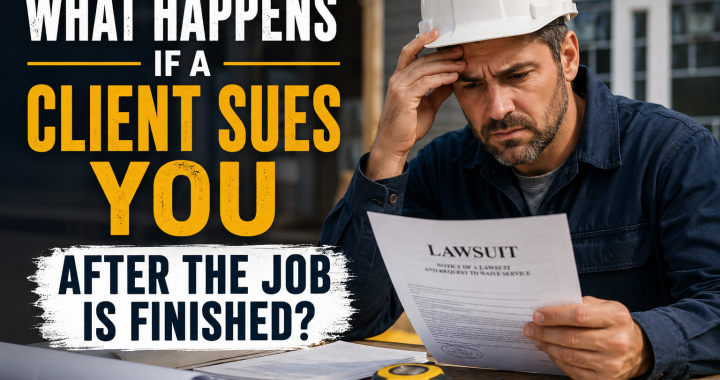
For many contractors, completing a project and receiving the final payment feels like crossing the finish line. Unfortunately, finishing the work doesn’t always mean the risk is over. Months—or even years—after a project is completed, a dissatisfied client may claim defective workmanship, property damage, or financial losses and decide to file a lawsuit.
Whether you’re a general contractor, electrician, plumber, HVAC technician, roofer, painter, or remodeling contractor, understanding what happens if a client sues you after the job is finished can help protect your business, your reputation, and your financial future.
Why Clients Sue Contractors After a Project Is Complete
Not every construction project ends with a handshake. Even when work appears to be completed successfully, issues can arise later that prompt a homeowner or commercial client to pursue legal action.
Some of the most common reasons include:
- Alleged construction defects
- Water intrusion or leaks discovered months later
- Structural issues
- Property damage resulting from completed work
- Claims that work was not performed according to the contract
- Breach of warranty
- Delays that allegedly caused financial losses
- Personal injury resulting from defective work
Sometimes the contractor is responsible. Other times, the issue may have been caused by another trade, improper maintenance, manufacturer defects, or circumstances beyond the contractor’s control. Regardless of fault, responding to a lawsuit can be expensive.
What Happens When You Receive a Lawsuit?
Receiving legal papers can be overwhelming, but the worst thing you can do is ignore them.
If you’re served with a lawsuit, you should:
- Notify your insurance agent or carrier immediately.
- Do not admit fault or promise payment.
- Gather all project documentation, including contracts, change orders, invoices, permits, inspection reports, emails, and photographs.
- Cooperate fully with your insurance company and any attorney assigned to your defense.
The sooner your insurance carrier is involved, the better your chances of preserving valuable evidence and building a strong defense.
Will Your General Liability Insurance Cover the Claim?
This is one of the most common questions contractors ask.
Commercial General Liability (CGL) insurance may provide coverage for certain lawsuits involving property damage or bodily injury caused by your completed work. This protection is often referred to as Products-Completed Operations Coverage, which is designed to respond after the project has been finished.
For example, your policy may help if:
- A plumbing repair later causes water damage.
- Improper installation results in damage to a customer’s property.
- A completed deck collapses and someone is injured.
- Roofing work allows water intrusion that damages the interior of a building.
If the claim is covered, your insurance company may:
- Hire an attorney to defend you
- Pay legal defense costs
- Investigate the claim
- Negotiate settlements
- Pay covered damages up to your policy limits
Even if a lawsuit is ultimately dismissed, legal defense alone can cost tens of thousands of dollars.

What Isn’t Covered?
One common misconception is that General Liability insurance pays to repair or replace your own faulty workmanship.
Generally speaking, insurance is intended to cover resulting property damage or bodily injury—not simply the cost of correcting poor workmanship.
For example:
If you install flooring incorrectly, your insurance may not pay to replace the defective flooring itself.
However, if the faulty installation causes significant water damage throughout the home, portions of that resulting damage may be covered depending on the circumstances and the policy language.
Every claim is different, and coverage depends on the facts of the loss as well as the specific insurance policy.
Why Documentation Matters
One of the best defenses against contractor lawsuits is thorough documentation.
Keep organized records that include:
- Signed contracts
- Detailed project specifications
- Change orders
- Emails and text communications
- Daily job logs
- Inspection reports
- Before-and-after photographs
- Material invoices
- Certificates of completion
Good documentation can demonstrate exactly what work was performed, when it was completed, and whether changes were requested by the customer.
In many disputes, clear documentation becomes your strongest evidence.
The Importance of Contracts
A well-written contract won’t prevent every lawsuit, but it can significantly reduce misunderstandings.
Contracts should clearly define:
- Scope of work
- Payment terms
- Change order procedures
- Project timeline
- Customer responsibilities
- Warranty information
- Dispute resolution procedures
Clear expectations often prevent disagreements from escalating into legal disputes.
Don’t Forget About Subcontractors
Many contractor lawsuits involve work performed by subcontractors.
If you hire subcontractors, it’s critical to:
- Verify they carry their own insurance.
- Obtain current Certificates of Insurance.
- Require Additional Insured status when appropriate.
- Use written subcontractor agreements.
- Confirm Workers’ Compensation coverage where required.
Otherwise, your business could find itself defending claims that originated from someone else’s work.
Umbrella Liability Can Provide Additional Protection
Construction-related lawsuits can quickly exceed the limits of a standard General Liability policy.
That’s why many contractors purchase Commercial Umbrella Liability insurance.
An umbrella policy provides additional liability limits above your underlying policies, helping protect your business against catastrophic claims involving severe injuries or extensive property damage.
Considering today’s litigation environment, many contractors find that higher liability limits offer valuable peace of mind.
Prevention Is Always Less Expensive Than Litigation
The best lawsuit is the one that never happens.
Contractors can reduce their risk by:
- Performing quality work
- Hiring qualified employees and subcontractors
- Communicating clearly with customers
- Following building codes
- Maintaining detailed records
- Responding quickly to customer concerns
- Carrying appropriate insurance coverage
A proactive approach to risk management not only protects your business but also strengthens your reputation and customer relationships.
The Bottom Line
No contractor wants to think about being sued after a project is complete, but it’s a reality of doing business in today’s construction industry. Even when you’ve done everything right, disputes can still arise months or years after the work is finished.
The good news is that having the right insurance coverage, maintaining thorough documentation, and working with an experienced insurance professional can make a significant difference when facing a claim.
Construction projects come with enough challenges. Your insurance should help protect your business when unexpected legal issues arise—not create additional headaches.
About BGES Group
Running a business is challenging enough without having to spend valuable time dealing with insurance issues. At BGES Group, we make insurance simple by providing responsive, personalized service and helping you secure the right coverage at competitive rates. With more than 45 years of industry experience and access to over 25 top-rated insurance carriers, we take the time to understand your business and design insurance solutions that protect your company, employees, assets, and future—without paying for coverage you don’t need.
Our clients appreciate having one dedicated insurance professional, fast certificate processing, prompt answers, and direct access to a real person when they call. We proactively solve problems before they become costly, help control insurance expenses, and provide expert guidance on Workers’ Compensation, General Liability, Commercial Auto, Umbrella Liability, and other business insurance needs. Our goal is simple: make insurance one less thing for you to worry about while providing the peace of mind that comes from knowing an experienced professional is looking out for your business.
Contact BGES Group Insurance Services
Gary Wallach, President Licensed in New York, New Jersey & Connecticut
📞 (914) 806-5853