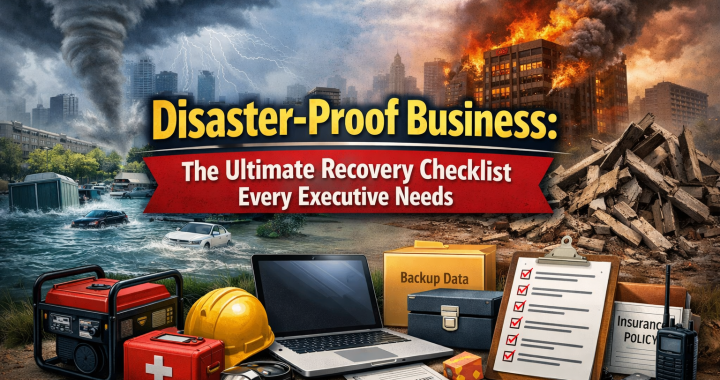
If a natural disaster struck tomorrow, would your business survive—or would it scramble to recover? It’s a tough question, but one every business owner and executive needs to answer honestly. With natural catastrophes increasing in both frequency and severity, companies can no longer afford to rely on luck or last-minute planning.
Disaster preparedness is not just about reacting—it’s about building resilience into the core of your business. Whether you’re running a construction firm, logistics company, or professional service operation, having a clear and actionable recovery plan can mean the difference between temporary disruption and permanent closure.
Here’s a comprehensive disaster recovery checklist designed to help you safeguard your business, your people, and your future.
Start with a Written Plan
Every business should have a formal disaster preparation and recovery plan. This document should clearly outline procedures, responsibilities, and contingencies. It’s critical that this plan exists in both digital and physical formats.
Keep hard copies in your office and distribute electronic versions to employees. If your building becomes inaccessible due to fire, flood, or structural damage, your team must still be able to access the plan remotely.
Prepare Emergency Supplies
In the immediate aftermath of a disaster, access to basic supplies can make a significant difference. Ensure your workplace is equipped with first aid kits, flashlights, batteries, bottled water, and other essential emergency items.
Regularly inventory and replenish these supplies so they are always ready when needed.
Back Up Your Data—Offsite
Your data is one of your most valuable assets. If your servers are destroyed in a fire or flood, could your business continue operating?
Daily backups to a secure offsite location or cloud-based system are essential. This ensures that even if your physical infrastructure is compromised, your operational data remains intact and accessible.
Establish an Alternate Work Location
If your office becomes unusable, your employees need to know exactly where to go. Designate an alternate meeting or work site in advance. This could be a secondary office, shared workspace, or temporary leased facility.
Managers should maintain updated employee contact lists and be ready to coordinate operations quickly. Planning ahead can significantly reduce downtime and confusion.
Invest in a Generator
Power outages are common during disasters, and waiting until one occurs to purchase a generator is a mistake. Demand spikes immediately after major events, making it difficult to secure equipment.
Ensure your generator has sufficient capacity to power your critical systems—whether that includes computers, servers, refrigeration, or machinery.
Assign Clear Responsibilities
A disaster plan is only effective if people know their roles. Assign specific responsibilities to team members in advance:
- Who will secure the premises before a storm?
- Who will deploy protective measures like shutters or sandbags?
- Who will handle cleanup and recovery efforts?
Keep in mind that some employees may be unavailable due to personal responsibilities or emergency service commitments, such as National Guard deployment. Build flexibility into your plan.
Review Your Insurance Coverage
Insurance is a cornerstone of disaster recovery. Carefully review all policies to ensure they cover relevant risks and provide adequate limits.
Pay particular attention to flood coverage—most standard policies exclude it. If your business operates in a flood-prone area, separate coverage is essential.
Protect Key People
Your business relies on more than just physical assets—it depends on people. A disaster could incapacitate or even result in the loss of key personnel.
Review your key-person life and disability insurance policies to ensure they provide sufficient protection. This coverage can help stabilize your business during an already challenging time.
Consider Business Interruption Insurance
Even if your property damage is covered, what about lost income?
Business interruption insurance provides financial support during temporary closures. It can help you continue paying employees, covering expenses, and maintaining operations while you recover.
This type of coverage can be the difference between surviving a disruption and shutting down permanently.
Develop a Public Relations Strategy
Communication is critical during a disaster. Without clear messaging, customers and partners may assume your business has closed for good.
Designate a company spokesperson and prepare a communication plan. Share updates with clients, vendors, and the media. If you relocate temporarily, make sure your audience knows where to find you.
Diversify Communication Systems
Disasters often disrupt communication networks. One provider may go down while another remains operational.
Encourage employees to use different mobile carriers to reduce the risk of total communication failure. This redundancy can keep your team connected when it matters most.
Secure Emergency Funding
Cash flow can become a major issue if your business is forced to shut down temporarily. Having access to emergency funds is crucial.
The Small Business Administration offers low-interest disaster loans to qualifying businesses. These funds can help cover operating expenses and keep your business afloat during recovery.
Protect Critical Documents
Your tax returns, contracts, and financial records are essential for recovery and insurance claims.
Store digital copies securely online and keep physical copies in a fireproof safe or offsite deposit box. If you’re in a flood-prone area, store documents at a higher elevation or inland location.
Avoid keeping all copies in areas exposed to the same risk.
Identify and Mitigate Risks
Every business faces unique risks based on its location, industry, and operations. Coastal businesses may prioritize hurricane preparedness, while others may focus on fire or earthquake risks.
Conduct a thorough risk assessment and tailor your disaster plan accordingly. Avoid a one-size-fits-all approach—what works for one business may not work for another.
The Takeaway
There is no universal formula for disaster preparedness. Each business must evaluate its own vulnerabilities and develop a customized strategy.
What matters most is taking action before disaster strikes. By planning ahead, assigning responsibilities, and securing the right resources, you can protect your business, your employees, and your long-term success.
Why Partnering with the Right Insurance Team Matters
At BGES Group, we understand the complexities of protecting businesses in today’s unpredictable environment. As construction insurance specialists serving New York, New Jersey, and Connecticut, we represent over 50 top-rated carriers and offer comprehensive coverage solutions—including property, builders’ risk, inland marine, general liability, umbrella liability, auto, workers’ compensation, and more.
Our commitment goes beyond policies. We are always available—by phone, text, or email—even on weekends—to help you navigate challenges and ensure your business stays protected.
We are also workers’ compensation specialists for Tri-State business owners. Whether you’re dealing with high rates, cancellations, audit disputes, or classification issues, we have solutions. Our preferred programs offer competitive pricing, long-term stability, and simplified audit processes.
If you want to strengthen your disaster preparedness and insurance strategy, we’re here to help.
Contact:
Gary Wallach
BGES Group
216A Larchmont Acres West
Larchmont, NY 10538
Phone: 914-806-5853
Email: bgesgroup@gmail.com
Website: http://www.bgesgroup.com
Your business is too important to leave unprotected. Plan today—so you’re ready for tomorrow.