New York Contractors – Defending Against Labor Law Claims: What You Need to Know

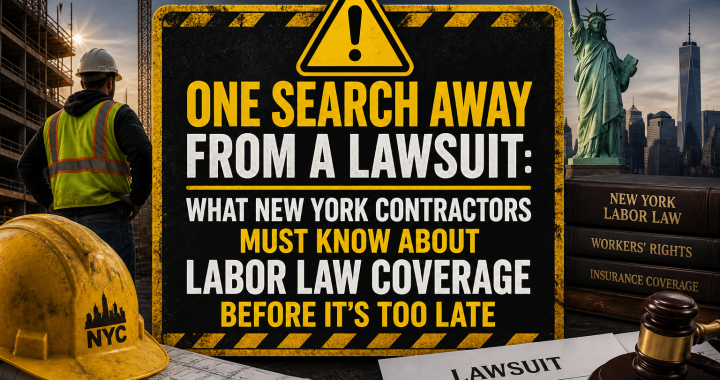
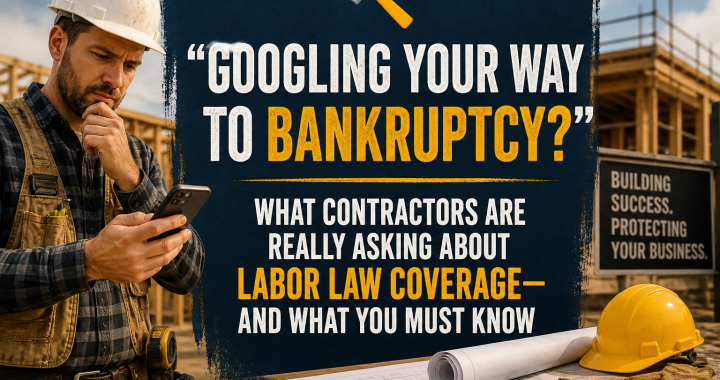
If you’re a contractor working in New York, you already know the phrase “New York Labor Law claim” can send a chill down your spine. Between strict liability standards and aggressive litigation, even a single incident can turn into a costly lawsuit. Whether you’re searching “how to defend a Labor Law 240 claim” or “ways to reduce construction liability in New York,” understanding your defense strategy is critical to protecting your business.

Let’s break down what contractors need to know about defending against claims under New York Labor Law §240, New York Labor Law §241(6), and related statutes—and how to stay one step ahead.


The Reality of New York Labor Law Claims

New York’s Labor Laws are some of the most worker-friendly in the country. Laws like Labor Law 240 (often called the “Scaffold Law”) impose absolute liability on owners and general contractors for gravity-related injuries. That means if a worker falls from a height—even if partially at fault—you could still be held fully liable.

This is why searches like “contractor liability for worker injury NY” or “construction accident lawsuit defense New York” are so common. The stakes are high, and the margin for error is razor thin.


1. Documentation Is Your First Line of Defense

When it comes to defending against a Labor Law claim, documentation isn’t optional—it’s everything.

Maintaining detailed records of:

  • Daily job site logs
  • Safety meetings (toolbox talks)
  • Equipment inspections
  • Incident reports

can make or break your case. If you’re ever in court, the ability to show that proper safety measures were in place can help shift the narrative.

Contractors often Google “what documentation do I need for construction lawsuits,” and the answer is simple: more than you think. The more thorough your records, the stronger your defense.


2. Strong Safety Programs Reduce Exposure

A well-documented safety program isn’t just good practice—it’s a legal strategy.

For claims under Labor Law 241(6), liability is often tied to violations of the Industrial Code. If you can demonstrate that:

  • Workers were properly trained
  • Safety protocols were enforced
  • Equipment met OSHA and NY standards

you may be able to limit or even defeat claims.

Search terms like “construction site safety compliance New York” and “how to prevent Labor Law claims” point to a key truth: prevention and defense go hand in hand.


3. Proper Use of Subcontractor Agreements

One of the most overlooked defenses involves risk transfer.

Well-drafted subcontractor agreements should include:

  • Indemnification clauses
  • Hold harmless provisions
  • Additional insured requirements

When a claim arises, these agreements can shift responsibility downstream to the subcontractor actually performing the work.

If you’ve ever searched “how to transfer risk in construction contracts NY” or “additional insured protection for contractors,” you’re already thinking in the right direction. Without these protections, you may end up absorbing losses that should have been someone else’s responsibility.


4. Insurance Coverage: Know What You Actually Have

Many contractors assume their general liability policy will fully protect them in a Labor Law claim. That assumption can be dangerous.

Common gaps include:

  • Labor Law exclusions
  • Height limitations
  • Employee injury exclusions (action-over claims)

If you’re searching “does general liability cover Labor Law 240” or “best insurance for NY contractors,” you need to carefully review your policies.

Umbrella liability coverage, proper additional insured endorsements, and action-over protection can significantly strengthen your defense strategy. Without them, even a strong legal defense may not prevent financial loss.


5. Immediate Response After an Incident

The moments following a job site accident are critical.

A strong response includes:

  • Securing the scene
  • Reporting the incident immediately
  • Gathering witness statements
  • Taking photos and preserving evidence

Delays or gaps in response can weaken your defense and open the door to exaggerated or fraudulent claims.

Contractors frequently search “what to do after construction accident NY,” and the answer is clear: act fast, document everything, and notify your insurance carrier immediately.

Article content

6. The Role of Legal Counsel and Claims Strategy

Defending a Labor Law claim isn’t just about facts—it’s about strategy.

Experienced construction defense attorneys understand how to:

  • Challenge the applicability of Labor Law statutes
  • Dispute claims of elevation-related risk
  • Argue lack of Industrial Code violations

For example, not every fall qualifies under Labor Law 240. Establishing that the injury didn’t involve a significant elevation differential can be a key defense.

If you’re looking up “how to fight a scaffold law claim” or “construction litigation defense NY,” the right legal team is essential.


7. Managing Subcontractors Effectively

Your subcontractors can either protect you—or expose you.

To reduce risk:

  • Verify certificates of insurance (COIs)
  • Confirm additional insured status is properly endorsed
  • Ensure coverage matches contract requirements

Too often, contractors rely on certificates without reviewing the actual policy endorsements. That’s a costly mistake.

Searches like “subcontractor insurance requirements NY” and “how to verify COI construction” highlight a growing awareness: trust, but verify.


8. Proactive Risk Management Wins Long-Term

The best defense is a proactive approach.

This means:

  • Regular safety audits
  • Contract reviews before work begins
  • Ongoing insurance evaluations
  • Training supervisors on compliance and documentation

Contractors who treat risk management as part of daily operations—not just a reaction to claims—are in a much stronger position.

If you’re searching “how to reduce construction liability exposure” or “risk management for NY contractors,” you’re already ahead of the curve.


Final Thoughts

New York Labor Law claims aren’t going away. In fact, they continue to be one of the biggest challenges facing contractors, owners, and developers across the state.

But here’s the reality: while you can’t eliminate risk entirely, you can control how exposed you are.

By focusing on documentation, safety, contracts, insurance, and rapid response, you give yourself the best possible chance to defend against claims—and protect your bottom line.


BGES Group is a leading Construction Insurance specialist serving New York, New Jersey, and Connecticut. We represent over 25 top-rated insurance carriers, providing access to the best general liability and umbrella liability programs available. Our comprehensive coverage options include property, builders’ risk, inland marine, general liability, umbrella liability, commercial auto, bid and performance bonds, workers’ compensation, New York State disability, and group health. Beyond offering policies, we pride ourselves on being highly accessible—by call, text, or email—even on weekends—so you always have a trusted partner to help you navigate any insurance challenge.

We are also Workers’ Compensation specialists for tri-state business owners. Whether you are dealing with high premiums, policy cancellations, difficulty obtaining coverage due to losses, audit disputes, or payroll misclassification issues, we can help. We offer specialized programs for industries including auto services, contractors (especially in New York), limousine services, logistics companies, manufacturers, recyclers, and trucking operations. As a “Preferred Agent” for a select workers’ compensation program, we can often secure highly competitive pricing, long-term stability, and multi-state coverage for qualified clients—while also simplifying the audit process and reducing the burden of annual audits.

Contact Us: Gary Wallach Phone: 914-806-5853 (Direct Line)

Email: bgesgroup@gmail.com

Website: www.bgesgroup.com

Office Location: 216A Larchmont Acres West, Larchmont, NY 10538
What Factors Influence Contractor Liability Insurance Cost?

Contractor liability insurance is an essential aspect of protecting your business, but understanding the costs associated with it can be challenging. In this blog, we’ll explore the key factors that influence the cost of contractor liability insurance, helping you make informed decisions.

Workers in safety gear at a construction site with a focus on rebar grids.

Understanding Your Industry Type

The nature of your industry significantly affects insurance costs. High-risk industries, such as construction, typically face higher premiums compared to low-risk industries.

Contractors operating in sectors with heightened risks, like electrical work or roofing, often encounter steeper insurance rates. This is because the likelihood of accidents and subsequent claims is more pronounced in these environments. Additionally, industries that involve hazardous materials add another layer of complexity and cost.

Evaluating Business Size and Revenue

Larger companies with higher revenues often pay more for insurance because they have more to cover and potentially larger risks.

As your business expands, both in terms of revenue and workforce, your potential liabilities increase. This expansion necessitates greater coverage, thus elevating insurance costs as larger businesses are perceived to have more assets at risk in litigation.

Small businesses, while generally incurring lower costs, can experience premium spikes if their clientele base includes high-profile projects or clients. This is due to the increased financial implications of potential claims or legal scenarios tied to such engagements.

Deciding on Coverage Limits and Deductibles

Higher coverage limits and lower deductibles generally lead to higher premiums. Balancing these factors to meet your protection needs while managing costs is crucial.

It’s vital to assess your coverage limits carefully. Businesses working on projects with high-value contracts might require more extensive coverage, which can lead to increased monthly premiums. Consider your financial capacity to handle higher deductibles in exchange for lower premium costs, creating a financial safety net that aligns with your business objectives.

Adjusting deductibles is another strategic approach. Opting for a higher deductible reduces the monthly premium but requires the business to bear more expenses out-of-pocket in the event of a claim. Each business must evaluate its financial situation to decide the best course of action.

Analyzing Claims History

A history of prior claims can increase your insurance costs. Insurers view businesses with frequent claims as higher risk.

Maintaining a clean claims history is crucial for keeping insurance costs down. Companies with fewer claims often benefit from lower premiums due to the perception of reduced risk. Implementing robust safety protocols and employee training can significantly reduce the likelihood of accidents and claims, improving your insurance profile.

Businesses with a history of frequent claims may also face higher deductibles as insurers attempt to mitigate perceived risks. Proactive risk management and thorough documentation can help demonstrate your company’s commitment to safety, potentially leading to better rates over time.

Considering Business Location

The location of your business can impact insurance costs due to local laws, regulations, and geographic risks such as extreme weather.

For instance, contractors in areas prone to natural disasters like hurricanes or earthquakes may experience higher premiums due to elevated risks. Likewise, densely populated urban centers may present challenges such as higher legal costs and regulatory requirements, impacting insurance expenses.

On the other hand, regions with more favorable climates and less regulatory complexity might offer cost savings on premiums. Additionally, businesses operating in areas with strong local safety regulations might benefit from incentives or lower costs due to the reduced likelihood of claims.

Summing Up Contractor Liability Insurance Costs

In conclusion, contractor liability insurance costs are determined by a variety of factors, including industry type, business size, coverage requirements, claims history, and location. Understanding these elements can help you better plan and budget for your insurance needs.

BGES Group is a leading Construction Insurance specialist serving New York, New Jersey, and Connecticut. We represent over 25 top-rated insurance carriers, providing access to the best general liability and umbrella liability programs available. Our comprehensive coverage options include property, builders’ risk, inland marine, general liability, umbrella liability, commercial auto, bid and performance bonds, workers’ compensation, New York State disability, and group health. Beyond offering policies, we pride ourselves on being highly accessible—by call, text, or email—even on weekends—so you always have a trusted partner to help you navigate any insurance challenge.

We are also Workers’ Compensation specialists for tri-state business owners. Whether you are dealing with high premiums, policy cancellations, difficulty obtaining coverage due to losses, audit disputes, or payroll misclassification issues, we can help. We offer specialized programs for industries including auto services, contractors (especially in New York), limousine services, logistics companies, manufacturers, recyclers, and trucking operations. As a “Preferred Agent” for a select workers’ compensation program, we can often secure highly competitive pricing, long-term stability, and multi-state coverage for qualified clients—while also simplifying the audit process and reducing the burden of annual audits.

Contact Us:  Gary Wallach   Phone: 914-806-5853 (Direct) Email: bgesgroup@gmail.com  Website: www.bgesgroup.com

Office Location: 216A Larchmont Acres West, Larchmont, NY 10538
 

How Can You File a Claim for Truckers Workers Compensation Insurance?

Navigating the world of workers compensation insurance can seem daunting, especially for truckers who are often on the road and far from traditional office settings. Whether you’re a trucker facing an injury or responsible for filing a claim, understanding the process is crucial. In this FAQ, we’ll break down the steps needed to file a claim for truckers workers compensation insurance so you can approach it with confidence.

Portrait of a confident truck driver in a safety vest, wearing sunglasses inside his vehicle.

Understand Your Coverage

Before filing a claim, it’s essential to thoroughly understand what your workers compensation insurance covers. Policies can vary, so review your specific coverage details and any limitations or conditions. Having a clear understanding of your policy will also help you identify what is not covered, enabling you to manage your expectations and plan accordingly.

Additionally, some policies may offer enhanced benefits, like coverage for mental health support post-accident, which can be crucial for recovery. It’s vital to explore every facet of your policy to ensure you receive all the benefits you’re entitled to.

Report the Injury or Incident Immediately

It’s crucial to report the incident to your employer as soon as it happens. This step ensures that there is a record and that the claim process can begin swiftly. Delaying the reporting can lead to complications in your claim, as well as potential denials if the incident isn’t documented promptly.

Prompt reporting also aligns with most state regulations, which often have strict deadlines for filing claims. By adhering to these regulations, you can safeguard your rights to compensation.

Gather Necessary Documentation

Collect all relevant documents, such as medical reports, accident reports, and witness statements. Having this documentation ready will facilitate a faster claims process. Ensure that your medical documents detail the extent of your injuries and any ongoing treatment you might require.

If there were witnesses to the incident, obtain their statements as soon as possible. These accounts can provide essential support for your claim, verifying the details of the incident and your account of events.

Additionally, keeping a personal record of the incident, your post-accident symptoms, and any interactions with medical professionals can help establish a timeline and support your claim further.

Submit the Claim Form

Fill out the required claim forms provided by your insurance company accurately and completely. Make sure to include all necessary details to avoid delays. Missing information can lead to request for additional information, prolonging the claims process.

Pay close attention to the specific requirements of the form, as each insurance provider may have different information fields. Double-check your contact information, incident dates, and any policy numbers required.

Once your forms and documents are complete, submit them through the appropriate channels, whether that be online, by mail, or in person. Confirmation of receipt can often be crucial in validating your submission.

Follow Up on Your Claim

After submitting your claim, stay in contact with your insurance provider to track the progress of your claim. Respond to any requests for additional information promptly. This initiative can significantly expedite the resolution process.

Consider scheduling regular check-ins with your claims adjuster. Open communication lines can reveal any potential issues early and prevent miscommunication.

If any disputes or complications arise during the claim process, understanding your rights and consulting with a workers’ compensation attorney or a firm specializing in truckers’ claims can offer additional support and guidance.

Wrap-Up: Filing Your Claim Successfully

Filing a claim for truckers workers compensation insurance doesn’t have to be a complicated process. By following these steps diligently and seeking the right guidance, you can ensure your claim is processed smoothly and promptly. Remember, the key is staying informed and proactive in managing your situation. For detailed guidance and expert support, visit our homepage to learn more about our services.

BGES Group is a leading Construction Insurance specialist serving New York, New Jersey, and Connecticut. We represent over 25 top-rated insurance carriers, providing access to the best general liability and umbrella liability programs available. Our comprehensive coverage options include property, builders’ risk, inland marine, general liability, umbrella liability, commercial auto, bid and performance bonds, workers’ compensation, New York State disability, and group health. Beyond offering policies, we pride ourselves on being highly accessible—by call, text, or email—even on weekends—so you always have a trusted partner to help you navigate any insurance challenge.

We are also Workers’ Compensation specialists for tri-state business owners. Whether you are dealing with high premiums, policy cancellations, difficulty obtaining coverage due to losses, audit disputes, or payroll misclassification issues, we can help. We offer specialized programs for industries including auto services, contractors (especially in New York), limousine services, logistics companies, manufacturers, recyclers, and trucking operations. As a “Preferred Agent” for a select workers’ compensation program, we can often secure highly competitive pricing, long-term stability, and multi-state coverage for qualified clients—while also simplifying the audit process and reducing the burden of annual audits.

Contact Us:  Gary Wallach   Phone: 914-806-5853 (Direct) Email: bgesgroup@gmail.com  Website: www.bgesgroup.com

Office Location: 216A Larchmont Acres West, Larchmont, NY 10538