🚧 One Claim Away from Disaster: Why New York Contractors Are More Exposed Than Ever

In today’s New York construction environment, the margin for error is razor thin.

Contractors aren’t just managing projects anymore—they’re navigating a minefield of:

  • Legal exposure
  • Rising insurance costs
  • Restrictive policy terms
  • Aggressive litigation

The reality: Many contractors are just one claim away from financial disaster.

Even experienced companies are getting blindsided by uncovered losses, denied claims, or lawsuits that exceed their limits.


⚠️ A Perfect Storm of Risk

New York contractors are dealing with a dangerous combination of:

  • Strict labor laws
  • Expanding insurance exclusions
  • Rising claim costs
  • Limited carrier appetite
  • Aggressive legal environment

Individually, these are manageable.
Together, they can turn a small incident into a catastrophic loss.


🏗️ The Labor Law Problem: Unlimited Liability

New York Labor Law (240 & 241) creates absolute liability for gravity-related injuries.

What that means:

  • If a worker falls → you can be fully responsible
  • Worker negligence often doesn’t matter
  • Damages can be massive

A single fall can lead to:

  • Major medical costs
  • Long-term disability
  • High-value lawsuits

👉 If your coverage or limits aren’t right, you pay the difference.


📉 Insurance Is Covering Less (While Costing More)

Today’s policies are more restrictive than ever.

Common issues:

  • Labor Law exclusions
  • Height limitations
  • Residential restrictions
  • Subcontractor warranty clauses

You may have insurance—but:

  • It may exclude the work you’re doing
  • It may require strict compliance
  • It may not respond to a claim

Bottom line: Paying more doesn’t mean you’re better protected.


🔌 The Subcontractor Trap

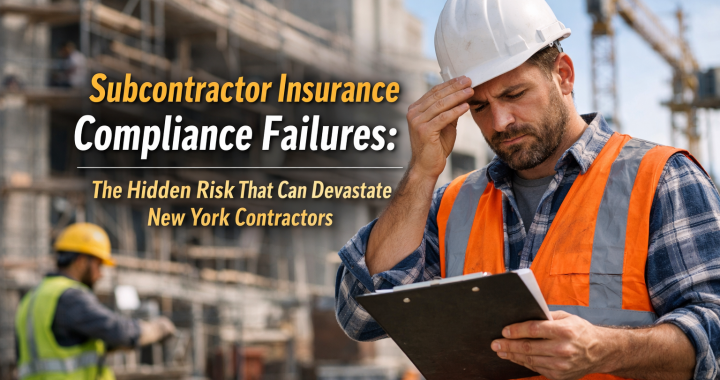
Subcontractors create one of the biggest hidden risks.

Most policies require:

  • Signed contracts
  • Certificates of insurance
  • Proper limits
  • Additional insured endorsements

Miss one detail?

❌ Claim denied

This happens every day because of:

  • Expired certificates
  • Missing paperwork
  • Incorrect endorsements

One small oversight = one massive uncovered loss


⚖️ Lawsuits Are Bigger Than Ever

New York litigation is escalating fast:

  • More lawsuits per incident
  • Higher settlement demands
  • Larger jury verdicts
  • Rising legal costs

Even a “minor” injury can turn into:
👉 A major lawsuit months later

Defense costs alone can drain your policy.


🕳️ The Real Threat: Coverage Gaps

The biggest danger isn’t what you know—it’s what you don’t.

Common gaps:

  • Hidden Labor Law exclusions
  • Missing coverage for certain operations
  • Low umbrella limits
  • Improper additional insured protection

Most contractors assume they’re covered…

Until they’re not.


⏱️ Claim Reporting Mistakes

Timing matters—especially in New York.

A common scenario:

  • Injury happens
  • It seems minor
  • No claim is reported
  • Months later → lawsuit

👉 Carrier response: Late notice = denial

If you don’t report it, you risk losing coverage.


📈 Growth Can Increase Risk

As your business grows:

  • Projects get larger
  • Work changes
  • Exposure increases

But if your insurance doesn’t evolve?

🚨 You’re operating with outdated coverage

Example:

  • You move into exterior work
  • Your policy excludes it
  • A claim happens

Result: No coverage


💥 The Truth Most Contractors Miss

Insurance disasters don’t just happen to careless companies.

They happen to:

  • Experienced contractors
  • Successful businesses
  • Companies that thought they were covered

All it takes is:
👉 One exclusion
👉 One oversight
👉 One claim


✅ How to Protect Your Business

You can reduce your exposure—if you’re proactive:

  • Review your policies in detail
  • Understand exclusions & conditions
  • Align contracts with coverage
  • Verify subcontractor compliance
  • Report claims immediately
  • Update coverage as you grow

🛡️ Don’t Let One Claim Define Your Future

In New York construction, preparation is everything.

At BGES Group, we help contractors:

  • Identify and eliminate coverage gaps
  • Secure proper Labor Law protection
  • Structure policies that actually respond
  • Strengthen risk transfer strategies

Our goal:
👉 Make sure one claim doesn’t put you out of business


📞 Gary Wallach: 914-806-5853
📧 bgesgroup@gmail.com
🌐 www.bgesgroup.com


Before your next project starts—ask yourself:
Are you truly covered… or just hoping you are?

10 Crucial Facts About Workers’ Compensation Insurance Every Contractor Should Know

Workers’ compensation insurance is a crucial aspect of every contractor’s toolkit, providing essential protection for both the workers and the business. Yet, many contractors overlook the fine details of this important insurance. Let’s simplify the world of workers’ comp insurance with some key facts that every contractor should know.

Two construction workers in hard hats assisting each other at a building site, highlighting teamwork.

1. The Foundation of Workers’ Compensation

Workers’ comp insurance is designed to provide financial and medical benefits to employees who sustain work-related injuries or illnesses. It’s vital for contractors to grasp this foundational concept to protect both their business and employees. This insurance ensures that employees receive medical care and benefits regardless of fault, promoting a healthier and more secure work environment.

For contractors, having a solid understanding of workers’ compensation is crucial. It not only helps streamline the process when dealing with workplace accidents but also fosters trust between employers and employees. When employees feel secure and supported, they are more likely to remain loyal and productive, knowing that their well-being is a priority for the company.

In most regions, carrying workers’ compensation insurance is not just advisable—it’s legally required. Failure to comply can result in hefty fines and legal consequences. Understanding these requirements is crucial for operating within the law. Different states have their specific mandates, and contractors should thoroughly review local regulations to avoid compliance issues.

Contractors who neglect legal requirements can face severe penalties. It’s important to regularly review your state or regional laws, as these can change and impact your obligations as an employer. A proactive approach to staying informed about legislative changes protects your business from unforeseen liabilities and builds a firm legal foundation.

3. The Coverage Workers’ Comp Provides

Workers’ compensation covers a range of costs such as medical expenses, rehabilitation costs, and a portion of lost wages. It acts as a safety net for employees who face workplace injuries or illnesses, ensuring they receive necessary support. This support not only aids in an employee’s recovery but also minimizes downtime, benefiting both parties involved.

A comprehensive policy can also cover disabilities, providing long-term benefits for employees who are unable to return to work immediately. Understanding the scope of your coverage helps contractors and their employees know what protection is available and prepare for any eventualities. Clarity in this area enhances trust and promotes a transparent work culture.

4. The Contractor’s Financial Safety Net

For contractors, workers’ comp provides a financial safety net. It shields your business from potentially devastating lawsuits that could arise from workplace accidents by offering compensation to affected employees. By reducing the risk of costly legal battles, workers’ compensation helps maintain your business’s financial stability and keeps operations running smoothly.

Furthermore, having adequate coverage can improve relations with clients and investors. Demonstrating a commitment to compliance and employee welfare can enhance your reputation and marketability. It’s an investment in the longevity and integrity of your contracting business, offering peace of mind and protection against unforeseen incidents.

5. How Premiums Are Determined

Premiums for workers’ compensation insurance are influenced by various factors, including the industry you’re in, the size of your payroll, and your claims history. Knowing these factors helps you manage and predict insurance costs effectively. Businesses that maintain excellent safety records and implement effective risk management techniques often benefit from reduced premiums.

A safer work environment can translate into lower insurance costs over time. Investing in safety training and robust safety measures is not only a moral imperative but also a financial strategy. These investments are crucial, and contractors should regularly assess their safety programs to enhance workplace safety and potentially reduce insurance costs.

6. The Importance of Accurate Record-Keeping

Maintaining precise and up-to-date records is essential for ensuring the correct computation of premiums and successful claim processing. It’s a best practice that can save contractors time and money. Detailed records support accurate payroll reporting and reduce discrepancies during audits and when filing claims.

Efficient record-keeping also involves documenting safety measures and training programs. These records can demonstrate your commitment to workplace safety and compliance, potentially leading to lower premiums. By prioritizing meticulous documentation, contractors can streamline their administrative tasks and focus on their core business operations.

7. The Role of Independent Contractors

While independent contractors aren’t typically covered under workers’ comp policies, understanding how they fit into the insurance picture is crucial. This clarity can help prevent potential legal disputes and ensure compliance with state laws. It’s important to distinguish between employees and independent contractors based on specific criteria to avoid misclassification issues.

Contractors should ensure that their independent contractors have their own insurance coverage where applicable. This not only protects the business from liability but also promotes a culture of responsibility and transparency. Clarity in roles and coverage is essential to maintaining legal compliance and protecting all parties involved in a business engagement.

8. The Process of Filing a Claim

Filing a workers’ compensation claim involves specific steps, including immediate reporting and thorough documentation of the incident. Familiarity with this process can streamline claims and expedite benefits for employees. Clear communication with your insurance provider and employees is crucial throughout this process, ensuring all parties are aware of their roles and responsibilities.

Employers should foster an environment where employees feel comfortable reporting incidents promptly. A culture of openness and responsiveness facilitates quicker resolutions and supports the health and safety of all employees. Having a comprehensive understanding of the claims process can prevent delays and disputes, aiding in a smoother recovery for injured workers.

9. Mitigating Risks with Safety Programs

Implementing robust safety programs can significantly reduce the risk of accidents, thereby lowering the number of claims and potentially reducing insurance premiums. It’s a proactive approach that benefits everyone involved. Regular training sessions and safety drills prepare employees to handle emergencies effectively, strengthening overall workplace safety.

An effective safety program should include regular inspections, maintenance schedules, and prompt addressing of potential hazards. Involving employees in safety planning can foster a collective commitment to maintaining safe working conditions. This collaboration not only enhances safety but also boosts employee morale and fosters a sense of teamwork.

10. Planning for the Future of Your Business

As your contracting business grows, so will your insurance needs. Reviewing your workers’ comp policy regularly and adapting it to your business’s evolving landscape ensures ongoing compliance and protection. Anticipating future changes and challenges can be beneficial in crafting a resilient risk management plan.

Continuous assessment of your insurance requirements, in line with business growth and workforce expansion, ensures you remain adequately covered. This strategic foresight not only strengthens your business against uncertainties but also reinforces your commitment to employee welfare. It’s a practice that upholds your business’s integrity and competitive edge in the industry.

BGES Group is a leading Construction Insurance specialist serving New York, New Jersey, and Connecticut. We represent over 25 top-rated insurance carriers, providing access to the best general liability and umbrella liability programs available. Our comprehensive coverage options include property, builders’ risk, inland marine, general liability, umbrella liability, commercial auto, bid and performance bonds, workers’ compensation, New York State disability, and group health. Beyond offering policies, we pride ourselves on being highly accessible—by call, text, or email—even on weekends—so you always have a trusted partner to help you navigate any insurance challenge.

We are also Workers’ Compensation specialists for tri-state business owners. Whether you are dealing with high premiums, policy cancellations, difficulty obtaining coverage due to losses, audit disputes, or payroll misclassification issues, we can help. We offer specialized programs for industries including auto services, contractors (especially in New York), limousine services, logistics companies, manufacturers, recyclers, and trucking operations. As a “Preferred Agent” for a select workers’ compensation program, we can often secure highly competitive pricing, long-term stability, and multi-state coverage for qualified clients—while also simplifying the audit process and reducing the burden of annual audits.

Contact Us:  Gary Wallach   Phone: 914-806-5853 (Direct) Email: bgesgroup@gmail.com  Website: www.bgesgroup.com

Office Location: 216A Larchmont Acres West, Larchmont, NY 10538
 

The 5 Biggest Insurance Mistakes Costing New York Contractors Millions Right Now

In New York’s construction industry, insurance isn’t just a requirement—it’s a lifeline. Yet every year, contractors across the state lose millions of dollars not because they didn’t have insurance, but because they made critical mistakes in how their coverage was structured, understood, or managed.

The harsh truth? Most insurance failures aren’t accidents—they’re preventable errors.

Here are the five biggest insurance mistakes New York contractors are making right now—and how to avoid becoming the next cautionary tale.

1. Assuming “General Liability” Covers Everything

One of the most common and costly misconceptions is believing that a standard General Liability policy provides full protection.

It doesn’t.

In New York, General Liability policies are often filled with:

  • Labor Law exclusions
  • Height limitations
  • Residential restrictions
  • Subcontractor conditions

Contractors often purchase a policy thinking they’re covered for jobsite accidents, only to find out after a claim that the exact type of incident they experienced is excluded.

For example, a fall from a ladder—one of the most common claims—may not be covered if the policy excludes Labor Law or gravity-related injuries.

The mistake: Trusting the name of the policy instead of understanding the details.

The cost: Six-figure legal bills and uncovered settlements.

2. Ignoring New York Labor Law Exposure

New York’s Labor Law (Sections 240 and 241) creates absolute liability for contractors and property owners in gravity-related injury cases.

This means:

  • Even if the worker is partially at fault, you can still be 100% liable
  • Lawsuits are more frequent and more severe
  • Settlements and verdicts are significantly higher than in other states

Despite this, many contractors either:

  • Don’t carry Labor Law coverage
  • Have policies that exclude it
  • Carry limits that are far too low

This is one of the fastest ways to turn a routine job into a catastrophic financial loss.

The mistake: Underestimating Labor Law risk.

The cost: Million-dollar claims that exceed policy limits—or aren’t covered at all.

3. Failing to Properly Transfer Risk

Construction contracts are supposed to protect you—but only if they’re done correctly.

Too often, contractors:

  • Sign agreements without reviewing insurance requirements
  • Fail to obtain proper additional insured endorsements
  • Don’t enforce subcontractor insurance compliance

As a result, when a claim occurs, they discover:

  • They’re not listed as additional insured
  • The subcontractor’s policy doesn’t respond
  • Risk was never transferred

This leaves the contractor holding the bag for accidents they didn’t even directly cause.

For example, if a subcontractor’s employee is injured and their coverage is inadequate or non-compliant, the general contractor may be pulled into a lawsuit and forced to rely on their own policy—or worse, pay out of pocket.

The mistake: Treating contracts like paperwork instead of protection.

The cost: Full financial responsibility for someone else’s mistake.

4. Not Understanding Subcontractor Requirements

If you use subcontractors—and most contractors do—your insurance policy likely includes strict requirements regarding their coverage.

These may include:

  • Minimum liability limits
  • Workers’ compensation coverage
  • Written contracts with indemnification clauses
  • Certificates of insurance on file

Failing to meet these requirements can result in claim denial.

This is especially dangerous because it often comes down to small administrative details:

  • A missing certificate
  • An expired policy
  • Incorrect endorsement language

When a claim happens, the insurance company will investigate. If the subcontractor requirements weren’t followed exactly, they may refuse to cover the loss.

The mistake: Not enforcing subcontractor compliance.

The cost: Denied claims and unexpected liability.

5. Waiting Until It’s Too Late to Review Coverage

Many contractors take a “set it and forget it” approach to insurance.

They:

  • Renew policies automatically each year
  • Don’t review endorsements or exclusions
  • Assume their coverage still fits their business

But businesses evolve:

  • You take on larger projects
  • You expand into new types of work
  • You hire more employees or subcontractors

If your insurance doesn’t evolve with you, gaps will form.

Unfortunately, most contractors only discover these gaps after a claim is filed—when it’s too late to fix them.

The mistake: Being reactive instead of proactive.

The cost: Uninsured losses that could have been prevented with a simple review.

Why These Mistakes Are More Dangerous Than Ever

The stakes have never been higher for New York contractors.

Today’s environment includes:

  • Increasing litigation
  • Higher settlement values
  • Stricter insurance underwriting
  • More exclusions in policies

At the same time, insurance companies are looking for reasons to deny or limit claims.

That means every mistake—no matter how small—can be magnified into a major financial problem.

How to Protect Yourself

Avoiding these mistakes requires more than just buying a policy. It requires a strategy.

Contractors who successfully protect their businesses:

  • Review their policies in detail
  • Understand every exclusion and condition
  • Align contracts with insurance coverage
  • Monitor subcontractor compliance
  • Work with experts who understand New York’s unique risks

The goal isn’t just to have insurance—it’s to have the right insurance, structured the right way.

Don’t Let a Simple Mistake Cost You Everything

In New York construction, one mistake can lead to one claim—and one claim can change everything.

At BGES Group, we specialize in helping contractors avoid these costly insurance pitfalls. We understand the challenges of New York’s Labor Law environment and the complexities of contractor insurance.

We help you:

  • Identify and eliminate coverage gaps
  • Secure proper Labor Law protection
  • Review contracts and risk transfer strategies
  • Ensure your policies match your operations

Our mission is simple: protect your business before a claim puts it at risk.

Contact BGES Group today:

Don’t wait until a claim exposes a mistake. Make sure your insurance is working for you—not against you—before it’s too late.

Coverage Gaps That Kill: What New York Contractors Don’t Know About Their Insurance

In New York’s high-risk construction environment, having insurance isn’t enough. What truly matters is what your policy actually covers—and what it doesn’t. Every year, contractors across the state discover too late that their insurance policies contain dangerous gaps, exclusions, or limitations that leave them fully exposed when a claim hits.

These aren’t small technicalities. These are the kinds of gaps that can turn a routine accident into a financial disaster.

If you’re a New York contractor, understanding these hidden dangers could be the difference between staying in business and shutting your doors.

The Illusion of Being “Fully Covered”

Many contractors believe that once they purchase a General Liability policy, they’re protected. Unfortunately, that assumption is often wrong.

Insurance policies today are filled with endorsements, exclusions, and conditions that dramatically change coverage. What looks like a standard policy on the surface may actually exclude the most common risks contractors face in New York.

This creates a dangerous illusion: you think you’re covered—until you’re not.

Labor Law Exclusions: The Biggest Hidden Threat

New York’s Labor Law (Sections 240 and 241) creates absolute liability for gravity-related injuries. These claims are among the most severe and expensive in the industry.

Here’s the problem:

Many insurance carriers now exclude Labor Law coverage entirely or severely limit it through endorsements.

That means:

  • Falls from ladders or scaffolds may not be covered
  • Gravity-related injuries could be excluded
  • Legal defense may not be provided

Contractors often don’t realize this until after a claim is filed—and denied.

Without proper Labor Law coverage, one accident can lead to hundreds of thousands—or millions—of dollars in out-of-pocket costs.

Height and Gravity Exclusions

Even when Labor Law isn’t explicitly excluded, many policies include height limitations.

For example:

  • No coverage for work above 2 or 3 stories
  • Exclusion for exterior work
  • Restrictions on roofing or façade work

If your business involves ladders, scaffolding, or elevated work (which most contractors do), these exclusions can completely wipe out your protection.

A contractor installing drywall on the third floor or repairing a roof may unknowingly be operating outside their coverage.

Subcontractor Warranty Clauses

If you use subcontractors, your policy likely includes a subcontractor warranty endorsement.

These clauses require you to:

  • Obtain certificates of insurance from all subs
  • Ensure subs carry specific limits
  • Name you as an additional insured
  • Use written contracts with indemnification language

If you fail to meet even one of these requirements, your insurance company may deny the claim entirely.

This is one of the most common—and devastating—coverage gaps in the industry.

Imagine this scenario:

A subcontractor causes an accident. You file a claim. The insurance company asks for documentation. One certificate is missing or expired.

Claim denied.

Additional Insured Misconceptions

Being named as an “additional insured” is often misunderstood.

Contractors assume:

  • They are fully protected under another party’s policy
  • Coverage is automatic and unlimited

In reality, additional insured coverage is:

  • Limited to specific operations
  • Subject to policy terms and exclusions
  • Often restricted by endorsement language

If the endorsement is incorrect—or missing—there may be no coverage at all.

Even worse, many contracts require specific endorsements like:

  • Primary and non-contributory wording
  • Ongoing and completed operations coverage

If your policy doesn’t match the contract requirements, you could be in breach—and uninsured.

Residential and Roofing Exclusions

Another common issue in New York contractor policies is residential exclusions.

Some policies exclude:

  • Work on single-family homes
  • Renovations in apartments or condos
  • Any residential construction activity

Others exclude roofing entirely, or only allow minor repairs.

If you’re doing residential work—even occasionally—you could be exposing your business to massive uninsured risk.

Late Notice of Claims

New York has strict requirements when it comes to reporting claims.

If you delay reporting an incident—even if it seems minor—the insurance company can deny coverage based on late notice.

This happens more often than you’d think:

  • A worker gets injured but says they’re “fine”
  • Weeks later, a lawsuit is filed
  • The contractor reports it late

Result: Denied claim.

Proper claim reporting procedures are just as important as the policy itself.

Misclassification and Workers’ Comp Gaps

Workers’ compensation is another area filled with hidden risks.

Common issues include:

  • Misclassifying employees as independent contractors
  • Underreporting payroll
  • Using uninsured subcontractors

If a worker is injured and your policy doesn’t properly cover them, you could face:

  • Direct liability for medical costs
  • State penalties and fines
  • Stop-work orders

In some cases, the insurance company can even rescind your policy, leaving you completely exposed.

The Domino Effect of Coverage Gaps

One coverage gap rarely exists in isolation. They tend to stack.

A single claim can trigger multiple issues:

  • Labor Law exclusion applies
  • Subcontractor warranty not met
  • Additional insured endorsement missing

Suddenly, you’re facing:

  • No coverage
  • Legal defense costs
  • Settlement or judgment

This is how contractors go from profitable to bankrupt overnight.

Why This Problem Is Getting Worse

The insurance market for New York contractors has hardened significantly.

Carriers are:

  • Adding more exclusions
  • Tightening underwriting standards
  • Increasing premiums

At the same time, lawsuits are increasing, and claim costs continue to rise.

This combination means contractors are paying more money for less coverage—and often don’t realize it.

The Solution: Proactive Risk Management

The only way to protect your business is to take a proactive approach.

That includes:

  • Reviewing your policies in detail
  • Understanding every exclusion and endorsement
  • Ensuring contracts align with coverage
  • Verifying subcontractor compliance
  • Reporting claims immediately

Most importantly, it means working with someone who understands the unique challenges of New York construction insurance.

Don’t Let a Coverage Gap Destroy Your Business

At the end of the day, the biggest mistake a contractor can make is assuming their insurance will protect them—without verifying it.

At BGES Group, we specialize in helping New York contractors uncover and eliminate dangerous coverage gaps before a claim happens.

We work with contractors across all trades to provide:

  • Labor Law coverage solutions
  • Detailed policy reviews
  • Contract and risk transfer guidance
  • Workers’ compensation strategies

Our goal is simple: make sure your insurance actually works when you need it.

Contact BGES Group today:

Before your next job starts, take a closer look at your coverage. Because in New York construction, what you don’t know about your insurance can cost you everything.

What Should New Jersey Contractors Know About Insurance Lookup?

Navigating the world of insurance can be daunting, especially for New Jersey contractors who need the right coverage to protect their businesses. This FAQ guide is designed to simplify the process and help you understand what you need to know about insurance lookups. Whether you’re new to contracting or just looking to ensure your coverage is up to date, this guide is here to help.

Two construction workers in hard hats assisting each other at a building site, highlighting teamwork.

Why Contractors Need Insurance in New Jersey

Understanding why insurance is vital for contractors in New Jersey is the first step. It not only protects your business from unforeseen mishaps but also ensures compliance with state regulations.

Without the proper insurance, contractors can face significant financial risks. Natural disasters, accidents on the job, or even claims of negligence can result in hefty costs. Insurance acts as a safety net that can cover legal fees, medical bills, and damage repairs, ensuring that your business does not suffer financially.

Moreover, having the right insurance can also enhance your business’s credibility. Homeowners and businesses are more likely to hire contractors who are properly insured as it assures them of professionalism and responsibility.

Types of Insurance Coverage Available

Familiarize yourself with the different types of insurance coverage available, such as general liability, workers’ compensation, and professional liability, to better protect your business.

General liability insurance is crucial for any contractor. It covers claims of bodily injury or property damage that might occur during the course of work. For instance, if a client trips over your equipment and gets injured, this insurance can cover the medical expenses.

Workers’ compensation insurance is mandatory in New Jersey if you have employees. This coverage provides benefits for medical care, rehabilitation, and lost wages if an employee gets injured or sick because of their job.

Professional liability insurance, also known as errors and omissions insurance, is particularly important for design-build and consulting contractors. It protects against claims of negligence in providing professional services, such as a flaw in architectural designs.

How to Conduct an Insurance Lookup

Learn the steps to effectively look up your current insurance policies, including verifying coverage details and expiration dates to ensure continuous protection.

Begin by gathering all your existing insurance documents. This includes policy numbers, insurance company contact information, and any correspondence you have had regarding your coverage. Keeping these documents organized will streamline the lookup process.

Next, reach out to your insurance agent or the customer service department of your insurance provider. Request a summary of your current coverage, and make note of the renewal dates and any changes in terms since your last policy was issued.

Additionally, you can use New Jersey’s online resources to verify if your insurance is compliant with state regulations. This can help prevent any surprises during audits or unexpected claims.

Updating Your Insurance Coverage

Discover the importance of reviewing and updating your insurance policy periodically to accommodate any changes in your business operations or state regulations.

Changes in your business, such as hiring more employees, expanding services, or purchasing new equipment, may require adjustments in your insurance coverage. Regular reviews can help you identify gaps that might expose you to risks.

Stay informed about changes in state regulations that may affect your insurance needs. For guidance, consider reaching out to professional insurance consultants or using state resources for updates on changes that might impact your business.

Updating your coverage can be as simple as contacting your insurance provider to evaluate your current policy and make necessary changes. Above all, staying proactive about your insurance needs helps maintain your business’s security and compliance.

Wrapping Up: The Importance of Insurance Lookup for Contractors

Understanding insurance lookup is crucial for New Jersey contractors to safeguard their businesses effectively. By following these steps, contractors can ensure they have the right coverage and are well-prepared to face any challenges. It’s always wise to stay informed and regularly check your insurance needs.

BGES Group is a leading Construction Insurance specialist serving New York, New Jersey, and Connecticut. We represent over 25 top-rated insurance carriers, providing access to the best general liability and umbrella liability programs available. Our comprehensive coverage options include property, builders’ risk, inland marine, general liability, umbrella liability, commercial auto, bid and performance bonds, workers’ compensation, New York State disability, and group health. Beyond offering policies, we pride ourselves on being highly accessible—by call, text, or email—even on weekends—so you always have a trusted partner to help you navigate any insurance challenge.

We are also Workers’ Compensation specialists for tri-state business owners. Whether you are dealing with high premiums, policy cancellations, difficulty obtaining coverage due to losses, audit disputes, or payroll misclassification issues, we can help. We offer specialized programs for industries including auto services, contractors (especially in New York), limousine services, logistics companies, manufacturers, recyclers, and trucking operations. As a “Preferred Agent” for a select workers’ compensation program, we can often secure highly competitive pricing, long-term stability, and multi-state coverage for qualified clients—while also simplifying the audit process and reducing the burden of annual audits.

Contact Us:  Gary Wallach   Phone: 914-806-5853 (Direct) Email: bgesgroup@gmail.com  Website: www.bgesgroup.com

Office Location: 216A Larchmont Acres West, Larchmont, NY 10538

From Jobsite to Courtroom: The Biggest Insurance Problems New York Contractors Face Today

New York contractors operate in one of the most complex and unforgiving insurance environments in the country. What starts as a routine construction project can quickly spiral into a lawsuit, denied claim, or uninsured loss.

The reality is simple: today’s contractors aren’t just managing jobsites—they’re managing legal exposure, evolving regulations, and increasingly restrictive insurance policies.

Understanding these risks isn’t optional—it’s essential for survival.


1. Scaffold Law: Absolute Liability, Absolute Risk

New York’s Labor Law Sections 240 and 241—commonly known as the “Scaffold Law”—create one of the toughest liability environments in the country.

Even if a worker is partially at fault, contractors and property owners can still be held fully liable for gravity-related injuries.

The result:

  • Massive claims
  • Nuclear verdicts
  • Skyrocketing insurance premiums

One accident can exceed policy limits—or fall outside coverage entirely.


2. Labor Law Coverage Restrictions & Rising Premiums

Getting proper coverage has become increasingly difficult.

Many carriers have exited the New York contractor market, while others have tightened underwriting significantly.

Contractors are now facing:

  • Higher minimum premiums
  • Strict loss history requirements
  • Limited umbrella capacity
  • Labor Law exclusions

Smaller contractors are being priced out, while proposed legislation may drive costs even higher.


3. Coverage Gaps & Hidden Exclusions

The biggest risk? What your policy doesn’t cover.

Common gaps include:

  • Labor Law exclusions buried in endorsements
  • Height/gravity limitations
  • Subcontractor warranty clauses
  • Residential or roofing restrictions

Many contractors only discover these issues after a claim is denied.

Frequent problems:

  • Missing named insureds
  • Late claim reporting
  • Misunderstood policy language

These small mistakes can lead to major financial losses.

Article content

4. Risk Transfer Failures (Contracts & Additional Insured Issues)

Contracts are supposed to protect you—but often they don’t.

Typical requirements:

  • Additional insured status
  • Primary & non-contributory wording
  • Waivers of subrogation
  • Broad indemnification

Common breakdowns:

  • Incorrect endorsements
  • Missing upstream parties
  • Contracts signed without review
  • Non-compliant subcontractor coverage

When a claim hits, contractors often find the risk was never properly transferred.

➡️ This is where jobsites turn into courtrooms.


5. Worker Classification & Compliance Risks

Insurance exposure doesn’t just come from accidents—it comes from compliance.

New York strictly enforces worker classification laws under the Construction Industry Fair Play Act.

Misclassification can lead to:

  • Workers’ compensation claims
  • Back taxes and penalties
  • Coverage disputes
  • Policy rescissions

Increased reporting requirements are making errors more frequent—and more expensive.


6. Litigation Explosion & Fraud Concerns

New York’s legal environment continues to drive up costs.

Contractors are experiencing:

  • More lawsuits per incident
  • Higher settlement demands
  • Increased defense costs
  • Greater risk of policy exhaustion

Even minor incidents can become major financial threats.


7. Bottom Line: Insurance Is No Longer “Set It and Forget It”

Today’s contractors must actively manage:

  • Coverage structure
  • Contract language
  • Subcontractor compliance
  • Claims reporting

Failing to do so can turn a profitable project into a financial disaster.


Protect Your Business Before the Next Claim Hits

If you’re a New York contractor, the biggest risk isn’t just an accident—it’s thinking you’re covered when you’re not.

At BGES Group, we help contractors:

  • Secure proper Labor Law coverage
  • Review contracts and risk transfer
  • Strengthen workers’ compensation strategies
  • Identify dangerous coverage gaps

Make sure your insurance works when you need it most.


📞 Gary Wallach: 914-806-5853 📧 bgesgroup@gmail.com 🌐 www.bgesgroup.com


Don’t wait until a claim exposes your coverage. Make sure you’re protected before the jobsite becomes a courtroom.

🔨 One Fall Can Cost Millions: 10 Reasons New York Contractors Can’t Afford to Skip Labor Law Coverage

In New York, construction is booming—but so are lawsuits. If you’re a contractor working in the state, you’re operating under some of the toughest liability laws in the country. Chief among them are New York Labor Laws 200, 240, and 241—statutes that can hold contractors and property owners absolutely liable for worker injuries, especially those involving falls.

That’s where Labor Law coverage comes in. Without it, one accident could financially cripple your business. Here are 10 critical reasons why every New York contractor needs proper Labor Law coverage.

⸝

1. New York’s “Scaffold Law” Is Unforgiving

Labor Law 240, often called the “Scaffold Law,” imposes absolute liability on contractors and property owners for elevation-related injuries. That means if a worker falls—even if it’s partially their fault—you can still be held 100% responsible.

⸝

2. Worker Lawsuits Are Extremely Common

Construction injuries happen. But in New York, injured workers frequently file lawsuits in addition to workers’ compensation claims, especially under Labor Law statutes. These lawsuits can result in massive settlements.

⸝

3. Settlements Can Reach Millions

Labor Law claims are notorious for high payouts. A simple ladder fall could turn into a multi-million-dollar claim, especially if serious injuries like paralysis or brain trauma are involved.

⸝

4. General Liability Alone Is Not Enough

Many contractors assume their general liability policy will protect them. In reality, most policies have Labor Law exclusions or limitations, leaving dangerous gaps in coverage.

⸝

5. You Can Be Liable Even If You Did Nothing Wrong

Unlike most states, New York doesn’t require negligence for certain Labor Law claims. Even if you followed all safety procedures, you may still be liable simply because the accident occurred.

⸝

6. Property Owners Push Risk Downstream

Owners and developers know the risks—and they push them onto contractors through contracts requiring Labor Law coverage and high limits. Without it, you may not even qualify for jobs.

⸝

7. Subcontractor Issues Can Come Back to You

If a subcontractor’s employee gets hurt, they can sue you directly. If your subcontractor doesn’t have proper insurance—or if their policy excludes Labor Law—you could be left holding the bag.

⸝

8. Legal Defense Costs Add Up Fast

Even if a claim is questionable, defending a Labor Law case can cost tens or hundreds of thousands of dollars in legal fees. Coverage ensures you’re not paying those costs out of pocket.

⸝

9. You Risk Losing Everything Without It

Without proper coverage, one serious claim could wipe out your business, your assets, and years of hard work. Contractors have gone bankrupt over a single uncovered Labor Law claim.

⸝

10. It Gives You a Competitive Advantage

Contractors with strong Labor Law coverage are more attractive to general contractors and project owners. It shows professionalism, preparedness, and financial responsibility.

⸝

⚠️ The Bottom Line

If you’re a contractor in New York, Labor Law exposure is not optional—it’s unavoidable. The question isn’t whether you’ll face risk, but whether you’re properly protected when you do.

⸝

🛡️ Protect Your Business with BGES Group

At BGES Group (chatgpt://generic-entity?number=0), we specialize in helping New York contractors secure the right Labor Law coverage and workers’ compensation solutions tailored to their business.

We understand the real risks you face on job sites—and we know how to structure policies that protect you from devastating claims while keeping you competitive in bidding.

Whether you’re a general contractor, subcontractor, or trade specialist, we’ll make sure there are no dangerous gaps in your coverage.

⸝

📞 Contact Information

Gary Wallach

📱 914-806-5853

📧 bgesgroup@gmail.com

🌐 www.bgesgroup.com

⸝

Don’t wait until it’s too late. One accident is all it takes. Make sure your business is protected with the right Labor Law coverage today.

How Contractor Insurance NY Can Mitigate Your Business Risks

Running a contracting business in New York comes with its own unique set of challenges and risks. Navigating these waters can be complex, but securing the right contractor insurance can make all the difference. In this blog, we’ll explore how contractor insurance can serve as a safety net, keeping your business safe from potential pitfalls.

Workers in high visibility gear at a busy construction site with scaffolding and steel frames.

Understanding the Basics of Contractor Insurance

Contractor insurance is a broad term that encompasses various types of coverage, each designed to protect different aspects of your business. From general liability to workers’ compensation, understanding the basics can help you choose the right mix of policies. General liability insurance, for instance, covers third-party injuries and damages caused by your business operations, offering a layer of protection against accidents. On the other hand, workers’ compensation is crucial for any contracting business, as it covers medical expenses and lost wages for employees injured on the job. With this dual approach, your business can tackle both external and internal risks.

It’s not just about having insurance; it’s about having the right insurance tailored to your specific needs. For instance, tools and equipment insurance ensures that your business doesn’t grind to a halt should something happen to your essential tools. Given that these tools are critical to the day-to-day running of your business, protecting them is a priority. Similarly, understanding the unique environmental risks you may face—like floods or hurricanes—is vital in New York. This way, you can adjust your policies accordingly, ensuring that you’re prepared for any eventuality.

Identifying the Risks in the Contracting Business

Contracting work often involves physical labor, exposure to hazardous materials, and the use of heavy equipment, all of which pose significant risks. Identifying these risks is the first step in mitigating them effectively. Physical injuries, for example, can range from minor cuts to severe injuries, and understanding these risks helps you better prepare with the right insurance coverage. Similarly, contracting businesses often deal with volatile environments—whether it’s dealing with dangerous chemicals or working at great heights—and these inherently risky conditions require robust safety measures and insurance policies.

Moreover, New York poses its own unique challenges—such as stringent regulations and high market competition—that add another layer of complexity to the risks faced by contractors. Navigating local compliance laws is vital, as failing to comply can lead to hefty fines or business closure. By identifying and thoroughly understanding these risks, along with industry-specific obstacles, you arm your business with the necessary tools to not only comply with local requirements but also thrive despite the challenges.

How Contractor Insurance Mitigates Financial Liabilities

Accidents happen, and when they do, contractor insurance can cover the costs associated with medical expenses, legal fees, and property damage, preventing these unforeseen events from crippling your business financially. For example, say a client trips over a power cord at a job site, incurring medical bills along with a lawsuit. Without the proper insurance, your business could face substantial financial hardship or even bankruptcy. However, with general liability and professional indemnity coverage, you’re equipped to handle such scenarios more efficiently.

A lesser-discussed but equally important aspect of insurance is its role in protecting your company’s financial health through insurance audits and adjustments. Regularly reviewing and adjusting your policies enables you to ensure your coverage is aligned with your current business operations and that you’re not over-insured or spending unnecessarily on premiums. This proactive maintenance of your insurance portfolio is just as crucial as any other financial planning you engage in for your business.

Choosing the Right Insurance Provider in NY

With numerous insurance providers in New York, selecting the right one for your business can be daunting. Consider factors such as coverage options, customer service, and reputation to make an informed decision. The ideal provider is one that not only offers a robust set of policies but also helps you tailor them to match your business needs. Top-tier providers will possess a strong reputation within the industry, display transparency in their policies, and have positive reviews from existing clients.

Engaging with providers that possess intimate knowledge of the New York market and regulatory requirements can significantly benefit your business. These providers are better equipped to offer the most comprehensive and relevant advice to meet regional demands. Additionally, seeking out testimonials or endorsements from peer businesses that have navigated similar challenges can offer invaluable insights into the decision-making process. With the right insurance partner, your business can confidently face whatever challenges come its way.

Real-Life Examples of Insurance Saving the Day

Hearing stories from real contractors who have benefitted from having the right insurance can underscore the importance and effectiveness of these policies in action. Consider a contracting business that was saved from financial ruin after a significant equipment theft, thanks to their well-structured tools and equipment insurance. This coverage not only reimbursed the company for the monetary value of the lost tools but also enabled them to resume operations swiftly without losing business to competitors.

Another poignant example is that of a contractor facing litigation over an alleged construction defect. The legal costs and potential damages threatened to drain their financial resources. However, comprehensive professional indemnity insurance covered these legal fees, allowing the business to focus on its ongoing projects without being bogged down by the legal battle. Such stories are not just reassuring but also stress the tangible benefits that comprehensive insurance coverage can bring to your operations.

Securing Your Business’s Future with the Right Coverage

In the fast-paced world of contracting, ensuring your business is adequately protected is not just a good idea—it’s essential. Contractor insurance in NY provides the peace of mind you need to focus on delivering exceptional service. By understanding your risks and securing the right coverage, you’re taking a proactive step toward safeguarding your business’s future.

BGES Group is a leading Construction Insurance specialist serving New York, New Jersey, and Connecticut. We represent over 25 top-rated insurance carriers, providing access to the best general liability and umbrella liability programs available. Our comprehensive coverage options include property, builders’ risk, inland marine, general liability, umbrella liability, commercial auto, bid and performance bonds, workers’ compensation, New York State disability, and group health. Beyond offering policies, we pride ourselves on being highly accessible—by call, text, or email—even on weekends—so you always have a trusted partner to help you navigate any insurance challenge.

We are also Workers’ Compensation specialists for tri-state business owners. Whether you are dealing with high premiums, policy cancellations, difficulty obtaining coverage due to losses, audit disputes, or payroll misclassification issues, we can help. We offer specialized programs for industries including auto services, contractors (especially in New York), limousine services, logistics companies, manufacturers, recyclers, and trucking operations. As a “Preferred Agent” for a select workers’ compensation program, we can often secure highly competitive pricing, long-term stability, and multi-state coverage for qualified clients—while also simplifying the audit process and reducing the burden of annual audits.

Contact Us:
Gary Wallach
Phone: 914-806-5853 (Direct)
Email: bgesgroup@gmail.com

Website: www.bgesgroup.com

Office Location:
216A Larchmont Acres West
Larchmont, NY 10538
 

Action Over Claims in New York: Why Your CGL Policy May Not Respond

For contractors operating in New York, few risks are as financially dangerous—and as widely misunderstood—as “action over” claims. These claims arise when an injured worker sues a third party (such as a property owner or general contractor), and that third party then brings a claim back against the injured worker’s employer. The result is a potentially catastrophic liability scenario that many contractors assume is covered under their Commercial General Liability (CGL) policy—only to find out too late that it may not be.

Understanding how action over claims work, and more importantly, how your CGL policy responds (or fails to respond), is critical for any contractor working in New York.


What Is an Action Over Claim?

Under normal circumstances, when an employee is injured on the job, their exclusive remedy against their employer is workers’ compensation. This system is designed to prevent lawsuits against employers while ensuring injured workers receive medical care and lost wage benefits.

However, New York’s Labor Law—particularly Sections 240(1) and 241(6)—creates a unique exception. These statutes impose strict liability on property owners and general contractors for gravity-related injuries and violations of the Industrial Code.

Here’s where action over comes into play:

  1. An employee of a subcontractor is injured on a job site.
  2. The injured worker sues the property owner and/or general contractor under Labor Law.
  3. The owner or GC then files a third-party claim (an “action over”) against the subcontractor (the injured worker’s employer), seeking indemnification or contribution.

This effectively bypasses the workers’ compensation shield and pulls the employer back into the lawsuit—often for substantial damages.


Why Action Over Claims Are So Dangerous

Action over claims can lead to extremely high settlements or verdicts because:

  • Labor Law 240(1) imposes absolute liability in many cases
  • Comparative negligence is often not a defense
  • Claims frequently involve severe injuries (falls from heights, falling objects, etc.)
  • Indemnification agreements may require the subcontractor to assume full responsibility

For subcontractors, this means they could be responsible not only for their employee’s injury but also for the legal liability of the owner and general contractor.


The Misconception: “My CGL Covers This”

Many contractors believe their CGL policy will step in to defend and indemnify them in an action over claim. While this may have been true in older or more comprehensive policies, modern underwriting—especially in New York—has significantly changed the landscape.

Today, many CGL policies include specific exclusions or endorsements that limit or eliminate coverage for exactly this type of exposure.

Article content

Common Policy Exclusions That Block Coverage

1. Action Over Exclusions

Some policies explicitly exclude coverage for claims arising out of bodily injury to an employee where a third party seeks indemnification or contribution. This directly targets action over scenarios.

2. Employee Injury Exclusions (Expanded Definitions)

Modern policies often broaden the definition of “employee” to include:

  • Subcontractor employees
  • Independent contractors
  • Leased or temporary workers

This means that even if the injured worker is not your direct employee, coverage may still be excluded.

3. Labor Law Exclusions

Certain carriers add endorsements excluding claims arising under New York Labor Law Sections 240 and 241 entirely. This removes coverage for the very statutes most commonly associated with action over claims.

4. Height Limitations

Policies may exclude work above a certain height (e.g., 10 or 15 feet). Since many Labor Law claims involve elevation-related risks, this can effectively eliminate coverage for common job site exposures.

5. Contractual Liability Limitations

If your indemnification agreement requires you to assume liability for a third party, but your policy restricts contractual liability coverage, you may be left uninsured for those obligations.


Real-World Scenario

Consider a drywall subcontractor working on a mid-rise residential project. One of their employees falls from a scaffold and suffers serious injuries. The worker sues the general contractor and property owner under Labor Law 240(1).

The GC then files an action over claim against the drywall subcontractor, citing the indemnification clause in their contract.

The subcontractor turns to their CGL carrier—only to discover:

  • Their policy includes an action over exclusion
  • The employee injury exclusion applies to subcontractor employees
  • There is a height limitation of 15 feet

The result? No coverage. The subcontractor is forced to defend the claim and potentially pay damages out of pocket.


Why Certificates of Insurance Are Not Enough

Many contractors rely heavily on certificates of insurance as proof of coverage. However, certificates do not reveal critical exclusions or endorsements.

A certificate may show:

  • $1,000,000 per occurrence limit
  • Additional insured status
  • Waiver of subrogation

But it will not disclose:

  • Action over exclusions
  • Labor Law limitations
  • Employee injury carve-outs

This creates a false sense of security that can be devastating when a claim occurs.


Risk Transfer Alone Won’t Save You

While transferring risk through contracts and requiring subcontractors to carry insurance is essential, it is not sufficient on its own.

If:

  • The subcontractor’s policy excludes action over claims, or
  • The limits are inadequate, or
  • The carrier denies coverage

…the financial exposure can shift back to you.

Proper protection requires alignment between contracts and actual policy language, not just certificates.


How Contractors Can Protect Themselves

To avoid being caught uninsured in an action over claim, contractors should take a proactive approach:

1. Review Policy Endorsements Carefully

Do not rely on summaries. Obtain and review full policy forms, especially exclusions related to:

  • Employee injury
  • Action over
  • Labor Law

2. Work With Specialized Brokers

New York construction risks require deep expertise. A knowledgeable broker can identify problematic endorsements and negotiate better terms.

3. Align Contracts With Coverage

Ensure your indemnification agreements are supported by your insurance policy. Otherwise, you may be assuming liabilities your policy won’t cover.

4. Require Strong Subcontractor Coverage

Verify that subcontractors carry:

  • No action over exclusions
  • Adequate limits
  • Proper additional insured endorsements

5. Consider Excess/Umbrella Policies

Even when coverage exists, Labor Law claims can exceed primary limits quickly. Excess coverage provides an additional layer of protection.


Final Thoughts

Action over claims represent one of the most significant uninsured exposures facing New York contractors today. The combination of strict Labor Law liability and increasingly restrictive CGL policy language creates a dangerous gap that many contractors do not discover until it is too late.

The key takeaway is simple: not all CGL policies are created equal. Understanding the exclusions and endorsements in your policy is just as important as knowing your coverage limits.

Contractors who take the time to properly structure their insurance programs—and work with professionals who understand the nuances of New York Labor Law—can avoid devastating financial consequences and operate with greater confidence.


**BGES Group is a leading Construction Insurance specialist serving New York, New Jersey, and Connecticut. We represent over 25 top-rated insurance carriers, providing access to the best general liability and umbrella liability programs available. Our comprehensive coverage options include property, builders’ risk, inland marine, general liability, umbrella liability, commercial auto, bid and performance bonds, workers’ compensation, New York State disability, and group health. Beyond offering policies, we pride ourselves on being highly accessible—by call, text, or email—even on weekends—so you always have a trusted partner to help you navigate any insurance challenge. We are also Workers’ Compensation specialists for tri-state business owners. Whether you are dealing with high premiums, policy cancellations, difficulty obtaining coverage due to losses, audit disputes, or payroll misclassification issues, we can help. We offer specialized programs for industries including auto services, contractors (especially in New York), limousine services, logistics companies, manufacturers, recyclers, and trucking operations. As a “Preferred Agent” for a select workers’ compensation program, we can often secure highly competitive pricing, long-term stability, and multi-state coverage for qualified clients—while also simplifying the audit process and reducing the burden of annual audits.

Contact Us: Gary Wallach Phone: 914-806-5853 (Direct)

Email: bgesgroup@gmail.com

Website: www.bgesgroup.com

Office Location: 216A Larchmont Acres West Larchmont, NY 10538

How Can Roofers in New York Ensure They Have the Right Workers’ Compensation Insurance Coverage?

Navigating the world of workers’ compensation insurance can be daunting, especially for roofers in New York, where the legal requirements and risks are significant. This guide will walk you through the essential steps to ensure you have the right coverage for your business.

Construction workers repairing a modern roof in ReykjavĂ­k, highlighting teamwork and safety.

Understand New York’s Workers’ Compensation Requirements

In New York, having a comprehensive understanding of the workers’ compensation requirements is pivotal for your roofing business. State law mandates that all businesses with employees must have workers’ compensation insurance, and this includes roofers. Exceptions are rare, so it’s wise to familiarize yourself with who must be covered to avoid penalties.

The process of comprehending these requirements can be streamlined by consulting with experts who have hands-on experience with New York’s specific regulations. This ensures total compliance with the local laws while safeguarding your business from potential legal issues.

Assess the Risks Associated with Roofing

Given the nature of roofing work, which involves high elevations and potentially dangerous equipment, it is prone to a higher incidence of workplace injuries. It’s crucial to identify these risks and evaluate them thoroughly so your insurance policy can adequately mitigate potential liabilities.

By identifying these risks early on, you can introduce preventive measures and training programs to minimize accidents, which may also result in favorable insurance premiums in the long run.

Choose the Right Insurance Provider

Selecting an insurance provider is not just about pricing; it’s about finding a company that offers a robust support system. Working with insurers known for their customer service and straightforward claims process can make all the difference when dealing with an incident.

A good provider will not only offer comprehensive workers’ compensation insurance for roofers but will also ensure that the coverage aligns with your specific business needs. This tailored service guarantees you get the best value for your investment.

Tailor Your Policy to Your Business Needs

No two roofing companies are alike. Whether you specialize in commercial, residential, or industrial roofing, your insurance needs will vary. By tailoring your insurance policy, you ensure that your unique risks are covered, providing peace of mind to you and your employees.

Collaborate with your insurance provider to craft a policy that considers your business’s specific operational scope and risk factors. This approach not only offers adequate protection but also potentially reduces unnecessary costs from overlapping coverages.

Regularly Review and Update Your Coverage

Over time, your business dynamics will change. Whether it’s an expansion of services or a shift in the number of employees, ensuring that you regularly update your insurance policy is crucial. This diligence keeps you compliant with evolving laws and fully protected against new risks.

Frequent reviews with your insurer not only safeguard your business but also adapt your coverage to new challenges and opportunities that arise in the ever-changing landscape of roofing.

Final Thoughts on Workers’ Compensation Insurance for Roofers

Securing the right workers’ compensation insurance coverage in New York is an essential step to protecting both your employees and your business. By understanding the requirements, choosing the right policy, and working with an expert, you can ensure peace of mind while focusing on what you do best—providing excellent roofing services.

BGES Group is a leading Construction Insurance specialist serving New York, New Jersey, and Connecticut. We represent over 25 top-rated insurance carriers, providing access to the best general liability and umbrella liability programs available. Our comprehensive coverage options include property, builders’ risk, inland marine, general liability, umbrella liability, commercial auto, bid and performance bonds, workers’ compensation, New York State disability, and group health. Beyond offering policies, we pride ourselves on being highly accessible—by call, text, or email—even on weekends—so you always have a trusted partner to help you navigate any insurance challenge.

We are also Workers’ Compensation specialists for tri-state business owners. Whether you are dealing with high premiums, policy cancellations, difficulty obtaining coverage due to losses, audit disputes, or payroll misclassification issues, we can help. We offer specialized programs for industries including auto services, contractors (especially in New York), limousine services, logistics companies, manufacturers, recyclers, and trucking operations. As a “Preferred Agent” for a select workers’ compensation program, we can often secure highly competitive pricing, long-term stability, and multi-state coverage for qualified clients—while also simplifying the audit process and reducing the burden of annual audits.

Contact Us:
Gary Wallach
Phone: 914-806-5853 (Direct)
Email: bgesgroup@gmail.com

Website: www.bgesgroup.com