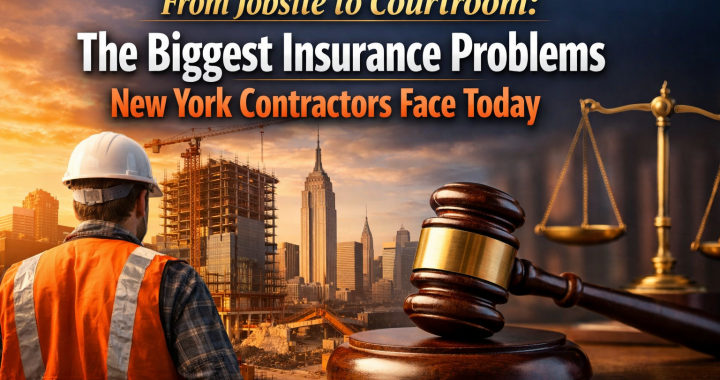
New York contractors operate in one of the most complex and unforgiving insurance environments in the country. What starts as a routine construction project can quickly spiral into a lawsuit, denied claim, or uninsured loss.
The reality is simple: today’s contractors aren’t just managing jobsites—they’re managing legal exposure, evolving regulations, and increasingly restrictive insurance policies.
Understanding these risks isn’t optional—it’s essential for survival.
1. Scaffold Law: Absolute Liability, Absolute Risk
New York’s Labor Law Sections 240 and 241—commonly known as the “Scaffold Law”—create one of the toughest liability environments in the country.
Even if a worker is partially at fault, contractors and property owners can still be held fully liable for gravity-related injuries.
The result:
- Massive claims
- Nuclear verdicts
- Skyrocketing insurance premiums
One accident can exceed policy limits—or fall outside coverage entirely.
2. Labor Law Coverage Restrictions & Rising Premiums
Getting proper coverage has become increasingly difficult.
Many carriers have exited the New York contractor market, while others have tightened underwriting significantly.
Contractors are now facing:
- Higher minimum premiums
- Strict loss history requirements
- Limited umbrella capacity
- Labor Law exclusions
Smaller contractors are being priced out, while proposed legislation may drive costs even higher.
3. Coverage Gaps & Hidden Exclusions
The biggest risk? What your policy doesn’t cover.
Common gaps include:
- Labor Law exclusions buried in endorsements
- Height/gravity limitations
- Subcontractor warranty clauses
- Residential or roofing restrictions
Many contractors only discover these issues after a claim is denied.
Frequent problems:
- Missing named insureds
- Late claim reporting
- Misunderstood policy language
These small mistakes can lead to major financial losses.

4. Risk Transfer Failures (Contracts & Additional Insured Issues)
Contracts are supposed to protect you—but often they don’t.
Typical requirements:
- Additional insured status
- Primary & non-contributory wording
- Waivers of subrogation
- Broad indemnification
Common breakdowns:
- Incorrect endorsements
- Missing upstream parties
- Contracts signed without review
- Non-compliant subcontractor coverage
When a claim hits, contractors often find the risk was never properly transferred.
➡️ This is where jobsites turn into courtrooms.
5. Worker Classification & Compliance Risks
Insurance exposure doesn’t just come from accidents—it comes from compliance.
New York strictly enforces worker classification laws under the Construction Industry Fair Play Act.
Misclassification can lead to:
- Workers’ compensation claims
- Back taxes and penalties
- Coverage disputes
- Policy rescissions
Increased reporting requirements are making errors more frequent—and more expensive.
6. Litigation Explosion & Fraud Concerns
New York’s legal environment continues to drive up costs.
Contractors are experiencing:
- More lawsuits per incident
- Higher settlement demands
- Increased defense costs
- Greater risk of policy exhaustion
Even minor incidents can become major financial threats.
7. Bottom Line: Insurance Is No Longer “Set It and Forget It”
Today’s contractors must actively manage:
- Coverage structure
- Contract language
- Subcontractor compliance
- Claims reporting
Failing to do so can turn a profitable project into a financial disaster.
Protect Your Business Before the Next Claim Hits
If you’re a New York contractor, the biggest risk isn’t just an accident—it’s thinking you’re covered when you’re not.
At BGES Group, we help contractors:
- Secure proper Labor Law coverage
- Review contracts and risk transfer
- Strengthen workers’ compensation strategies
- Identify dangerous coverage gaps
Make sure your insurance works when you need it most.
📞 Gary Wallach: 914-806-5853 📧 bgesgroup@gmail.com 🌐 www.bgesgroup.com
Don’t wait until a claim exposes your coverage. Make sure you’re protected before the jobsite becomes a courtroom.