Construction in New York is profitable — and risky. Between towering scaffolds, crowded job sites, and complex multi-party contracts, a single injury claim can threaten your business. That’s why savvy contractors combine insurance, carefully drafted contract language (indemnities, hold-harmless clauses, additional-insured endorsements), and proactive risk control to reduce exposure — and to make sure, if the worst happens, the cost doesn’t come out of your pocket. Below is a practical guide to how these protections work in New York and how BGES Group can help you implement them.
1) Know the big legal traps: Labor Law 240 (the “Scaffold Law”) and its reach
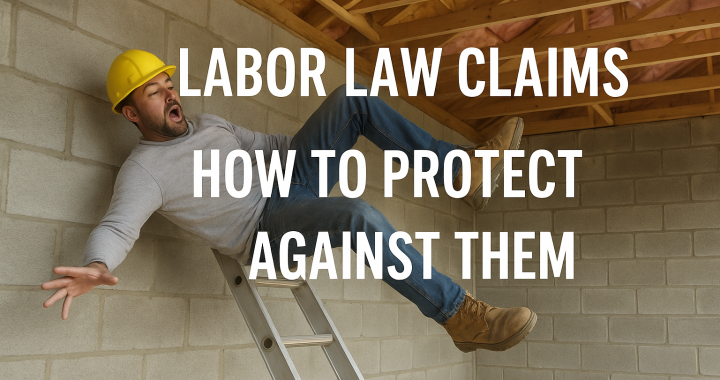
New York’s Labor Law §240 — commonly called the Scaffold Law — imposes strict (often called “absolute”) liability on owners and contractors for gravity-related injuries (falls or being struck by falling objects) when proper safeguards aren’t provided. That means an injured worker can recover against you even if you weren’t negligent in the usual sense — liability focuses on whether proper protective devices, rigging or safeguards were provided. Because awards in these cases can be large, understanding how §240 operates is the first line of defense for New York contractors.
2) Insurance — the foundation of protection
Insurance is not optional. Key coverages every contractor should carry include:
- Commercial General Liability (CGL) — covers third-party bodily injury and property damage claims (but read exclusions carefully).
- Workers’ Compensation — mandatory in New York for employees; it generally limits employee recovery against you but doesn’t prevent third-party suits or certain statutory claims.
- Employer’s Liability (part of WC policies) — covers claims not barred by workers’ comp.
- Excess/Umbrella — increases limits above primary policies for catastrophic claims.
- Contractors Pollution, Builders Risk, and Professional Liability — where applicable.
Make sure limits match project scale and that your policies include appropriate endorsements (e.g., waiver of subrogation, primary/non-contributory wording when required). Your broker should model worst-case scenarios (e.g., a Labor Law 240 claim) and recommend limits and wording that make sense for your risks.
3) Additional insured status — useful but limited
Requesting to be named as an “additional insured” on a subcontractor’s CGL policy is a common way GCs and upstream parties shift risk. While additional-insured endorsements can provide defense and indemnity benefits, New York courts and recent decisions have imposed limits (for example, privity or specific wording can matter). Don’t assume the mere phrase “additional insured” gives full protection; read the endorsement language and understand when coverage attaches and whether it’s primary or follows other insurance.
4) Indemnity and hold-harmless agreements — powerful but constrained
Indemnity (you agree to indemnify another for losses) and hold-harmless clauses are ubiquitous in construction contracts. However, New York law restricts how far a party can force another to indemnify it for its own negligence. General Obligations Law provisions and public policy limit enforcement of clauses that would require indemnification for the indemnitee’s own negligence in many situations. That means a clause that looks protective on paper can be partly or wholly unenforceable if it violates statutory rules or public policy. Use narrow, specific indemnities (e.g., for your negligence, for your employees’ acts, or for named risks) drafted with New York law in mind.
5) Contract drafting best practices (practical checklist)
- Require clear insurance limits, primary/non-contributory wording, evidence of coverage before mobilization.
- When accepting indemnity, cap it where possible, carve out negligence of the indemnitee, or add reciprocal indemnities.
- Include waiver of subrogation from insurers and require contractors to maintain coverage for the full statute of limitations.
- Require certificates and copies of endorsements — certificates alone can be misleading.
- Stipulate duty to defend language if you must rely on indemnity — defense costs can destroy a business.
Having an attorney and an experienced broker review and negotiate these points before signing is worth the cost.
6) Administrative and loss-control steps that reduce legal exposure
Insurance and contracts transfer and allocate risk — they don’t eliminate it. Strong on-site safety programs, documented toolbox talks, pre-task planning, competent supervision, fall-protection systems, and prompt incident reporting reduce the likelihood of claims and, if a claim occurs, help your defense. Keep training logs, equipment inspection records, and written site-safety plans. These practical steps both lower premiums and strengthen your position if sued.
7) How BGES Group helps New York contractors
BGES Group specializes in construction insurance for the tri-state area and understands how New York’s unique legal landscape (including Labor Law §240 exposure and contract-law limits) affects coverage choices and contract negotiations. BGES will:
- Evaluate your project risks and recommend specific coverage and limits tailored to the job size and exposure.
- Review contract requirements and advise on insurance and endorsement language that satisfies owners/GCs while protecting your company.
- Help place additional insured endorsements, excess limits, and workers’ comp packages competitively so you’re both compliant and cost-effective.
- Provide ongoing account management at renewal — ensuring certificates, endorsements, and policy terms stay aligned with changing project demands.
8) Bottom line + next steps
If you’re a New York contractor, don’t wing it: (1) carry the right coverages and adequate limits, (2) get contract language reviewed and negotiated to avoid unenforceable indemnities, (3) insist on clear additional-insured wording and endorsements, and (4) run a documented safety program. These steps together dramatically reduce both the risk of a claim and the chance it will devastate your business.
Need help now? Contact BGES Group — they specialize in construction and workers’ compensation insurance for NY contractors and can run a tailored risk assessment for your company:
- BGES Group, 216A Larchmont Acres West, Larchmont, NY 10538.
- Phone: 914-806-5853 (Gary Wallach).
- Email: bgesgroup@gmail.com.
- Website: www.bgesgroup.com.