Many business owners assume that auto insurance only matters if their company owns vehicles or operates a fleet of vans or trucks. In reality, auto-related liability exposures exist for nearly every business — even those without a single vehicle titled in the company’s name.
Consider these everyday situations: An employee runs a quick errand in their personal car. A manager rents a vehicle while attending a conference. A salesperson borrows a car to visit a client.
If an accident happens during any of these scenarios and your business does not have the proper insurance protection, your company could be left financially vulnerable to lawsuits, medical claims, and costly legal expenses. That is where Hired and Non-Owned Auto Coverage becomes essential.
These two coverages are designed specifically to protect businesses from liability when vehicles are used for business purposes but are not owned by the company.
Understanding the Difference Between Hired and Non-Owned Auto Coverage
Although often grouped together, these coverages protect against different risks:
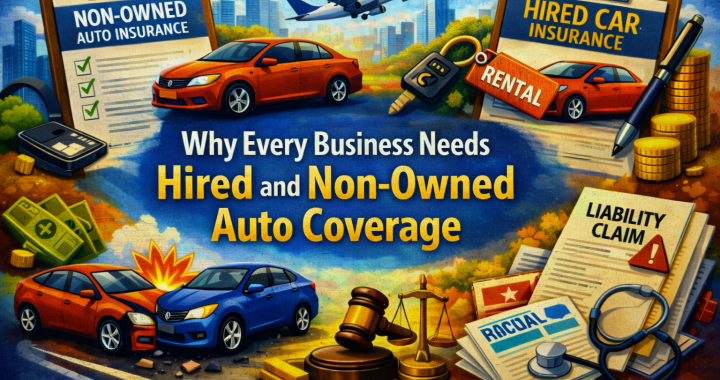
Non-Owned Auto Coverage This insurance protects your company if it is sued as a result of an auto accident involving an employee’s personal vehicle while they are conducting company business. For example, if an employee causes an accident while driving their own car to meet a client or deliver materials, your business can be named in the lawsuit. Non-owned auto coverage helps shield your company from that liability.
Hired Auto Coverage This coverage applies to vehicles that your business rents, hires, or borrows on a short-term basis for business use. This commonly includes rental cars used for conferences, client meetings, or business travel. If an accident occurs while an employee is driving a rented or borrowed vehicle for work, hired auto insurance can help pay for your company’s liability costs.
Together, these coverages form a critical safety net for businesses whose employees drive vehicles that are not company-owned but are still being used for company purposes.

Who Should Carry This Coverage?
Your business should strongly consider hired and non-owned auto insurance if:
- Employees use their personal vehicles for company errands
- Your company rents cars or vans for business travel
- Staff attend conferences, trade shows, or client meetings
- You borrow vehicles for short-term business needs
- You have no vehicles titled in the company name but still face auto exposure
These coverages are commonly added as an endorsement or rider to a General Liability policy or a Commercial Auto policy. In many states, when there are no vehicles titled in the business name, hired and non-owned auto coverage can also help satisfy contractual requirements for commercial auto insurance.
How the Coverage Works
Hired and non-owned auto insurance is strictly liability insurance, meaning it protects your business against third-party claims. This includes:
- Physical damage to another person’s vehicle
- Bodily injury and medical expenses for third parties injured in an accident
- Legal defense costs, settlements, and court judgments if your business is sued for negligence
This protection can be vital, as lawsuits related to auto accidents can quickly escalate into six-figure or even seven-figure claims when injuries are involved.
What This Coverage Does NOT Include
It is just as important to understand the limitations of hired and non-owned auto insurance. These policies do not cover:
- Damage to your employee’s personal vehicle or a rented vehicle
- Medical bills for your employee if they are injured
- Accidents that occur during personal, non-business use
- Comprehensive or collision damage on the vehicle itself
Employees must still rely on their personal auto insurance for those types of losses. Hired and non-owned auto coverage exists solely to protect the business from liability exposure.
Why This Coverage Is Crucial
If your employees drive on your behalf, your business carries legal responsibility for their actions. Without hired and non-owned auto coverage, your company could be forced to pay out-of-pocket for property damage, injury claims, and legal defense costs resulting from an accident.
This coverage helps:
- Protect your balance sheet from catastrophic losses
- Ensure compliance with contracts and client requirements
- Reduce gaps between personal auto insurance and business liability
- Provide peace of mind when employees drive for work
In today’s legal climate, even a minor accident can result in significant financial exposure. Hired and non-owned auto coverage is one of the most cost-effective ways to manage that risk.
How BGES Group Helps Protect Your Business
At BGES Group, we specialize in helping businesses identify and close insurance gaps that often go unnoticed — including hired and non-owned auto exposure. Many companies assume they are protected, only to discover too late that their policies exclude critical risks.
We take a consultative approach by:
- Reviewing how your employees actually use vehicles
- Identifying liability gaps in your current insurance program
- Designing coverage solutions tailored to your operations
- Ensuring compliance with contracts and state requirements
Our mission is simple: protect your business before a claim happens, not after.
Contact BGES Group
If your business rents vehicles, borrows vehicles, or allows employees to use personal cars for work, now is the time to review your insurance coverage.
Gary Wallach BGES Group
📞 914-806-5853
Let BGES Group help you protect your business from unexpected auto liability risks and ensure you have the right coverage in place — before an accident becomes a lawsuit.