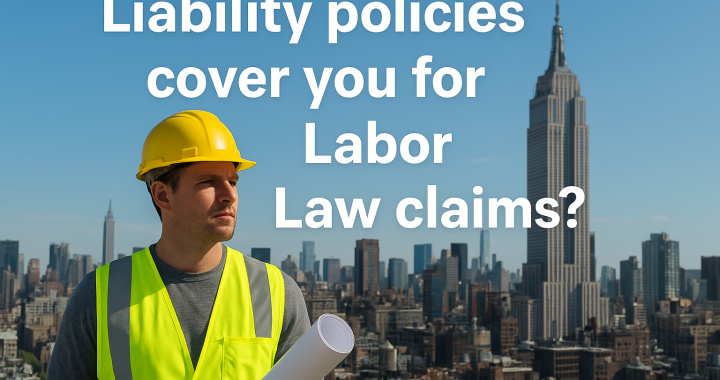
New York Labor Laws 240 and 241 are critical statutes that directly affect contractors, subcontractors, and property owners working in the construction industry. Commonly referred to as the Scaffold Law, Labor Law 240 imposes strict liability on contractors and property owners for falls and related injuries resulting from inadequate fall protection. It mandates that workers performing tasks on elevated surfaces must be protected by appropriate safety equipment like harnesses, guardrails, or scaffolding, and makes their employers strictly liable for injuries that occur due to a lack of such protections regardless of fault. Labor Law 241 complements this by incorporating specific safety standards, largely drawn from the New York Industrial Code, that require employers to provide construction workers with a workplace free from recognized hazards. Together, these laws were enacted to prioritize worker safety, ensure proper safety protocols, and reduce the number of preventable injuries in construction and renovation sites across New York State.
Compliance with these laws has wide-ranging implications for contractors beyond just safety practices. Because 240 and 241 operate under strict liability in many cases, injured workers can pursue claims against insurers and contractors without needing to prove negligence. For contractors operating in New York, this has influenced insurance underwriters’ perspectives and increased scrutiny when writing Commercial General Liability (CGL) policies. Insurers view the state’s liability landscape as high risk, which can lead to higher premiums, narrower coverage terms, and more frequent disputes over policy application after accidents occur. As a result, understanding the nature of labor law claims and how they intersect with liability insurance is essential for any contractor doing business in New York.
Five Types of Labor Law Claims Contractors May Face
- Fall from Height A classic Labor Law 240 claim involves a construction worker falling from an unprotected elevated surface — for example, a worker falling from a roof edge while installing HVAC equipment. If the contractor fails to supply or enforce the use of appropriate fall protection, they can be held strictly liable for the worker’s injuries. Because fault is not a defense under this statute, even if the injured worker disregarded provided safety measures, the contractor and responsible parties may be financially accountable.
- Falling Debris Injuries Under Labor Law 241’s safety standards, contractors must implement safeguards to prevent tools, materials, or debris from falling and injuring workers below. Imagine a scenario where unsecured tools fall from scaffolding and strike a laborer on a lower level. Such an incident may prompt a Labor Law 241 claim alleging inadequate protective measures, such as missing overhead protection or netting.
- Trenching and Excavation Collapse Trenching work poses unique hazards, and without proper shoring, benching, or shielding, an excavation collapse can result in serious injury or death. Labor Law 241 mandates that employers follow established safety codes for excavation work. If a collapse occurs because these codes weren’t followed, the injured party could pursue a claim against the contractor for failing to comply with the statutory safety requirements.
- Defective Scaffold or Ladder Claim Labor Law 240 claims are not limited to cases involving the absence of fall protection; they also include the use of defective or improper safety equipment. A worker injured due to a malfunctioning scaffold or faulty ladder may trigger a strict liability claim under 240, asserting that appropriate, safe equipment was not provided despite regulatory expectations.
- Action Over Claim (Third-Party Liability) While most labor law lawsuits arise directly from injured workers, Action Over claims involve third parties — often subcontractors — seeking indemnity or contribution from a general contractor or property owner. For example, if a subcontractor is sued by an injured employee and believes that the general contractor’s failure to maintain a safe worksite was the cause, they may file an Action Over claim to shift or share liability. These claims can significantly complicate defense strategies and risk allocation among project stakeholders.

Securing Coverage Under a CGL Policy
For New York contractors, a Commercial General Liability (CGL) policy provides essential financial protection against bodily injury and property damage claims arising from jobsite incidents. However, because of the unique nature of Labor Laws 240 and 241, not all CGL policies automatically respond to these claims. Insurers may include specific endorsements or exclusions that limit coverage for strict liability claims, especially those rooted in scaffold and elevation-related injuries. Contractors must therefore be diligent when selecting and reviewing CGL coverage to ensure that it truly protects them against the full range of labor law exposures present in New York.
A standard CGL policy without proper endorsements might technically provide liability coverage for bodily injury, but carriers often deny coverage post-accident by invoking exclusions that purport to remove coverage for certain categories of labor law claims. These denials can leave contractors exposed to significant defense costs and potentially devastating judgments. To mitigate this exposure, contractors should negotiate with brokers and underwriters to secure proper policy language that remains as broad and inclusive as possible in covering Labor Law 240 and 241 claims.
Three Critical Policy Exclusions to Avoid or Modify
- Action Over Exclusion An Action Over exclusion prevents a CGL policy from covering claims where another insured — typically a subcontractor — sues the named insured (often a general contractor) seeking indemnity or contribution after a third-party injury. Given the prevalence of Action Over claims in the aftermath of Labor Law incidents, especially in multi-tiered construction projects, excluding this type of coverage can expose a contractor to substantial unreimbursed liabilities. Contractors must ensure that their CGL forms either omit this exclusion entirely or include endorsements that restore coverage.
- Employee Injury Exclusion Many CGL policies contain exclusions for injuries to employees of the insured, reasoning that such risks should be covered under workers’ compensation. However, because Labor Laws 240 and 241 allow injured workers to pursue third-party claims against contractors and owners beyond traditional workers’ compensation, a broad employee injury exclusion can swallow up valid liability coverage. It is vital to negotiate the narrowing or removal of this exclusion so that claims brought by employees — such as those under strict liability statutes — are still eligible for defense and indemnity under the CGL.
- Limited Contractual Liability Exclusion Contractors often enter into contractual agreements that require them to assume liability for certain jobsite risks. CGL policies may include a limited contractual liability exclusion that narrows or eliminates coverage for liabilities assumed under contract. Since many construction contracts include indemnity provisions related to compliance with safety laws, ensuring that the CGL policy covers these assumed contractual liabilities — particularly those involving Labor Laws 240 and 241 — is paramount. Contractors should seek tailored endorsements to expand contractual liability coverage where necessary.
BGES Group: Your Partner in New York Construction Insurance
Given the complexity of New York’s construction liability environment, working with specialists who understand labor law exposures and insurance markets is essential. That’s where BGES Group stands apart. We are seasoned experts in construction insurance, with a dedicated focus on providing tailored solutions for contractors navigating New York’s unique regulatory and risk landscape. From designing robust CGL policies that address strict liability exposures to ensuring critical exclusions are appropriately negotiated, BGES Group is committed to protecting your business from the unforeseen financial consequences of jobsite accidents.
Our deep industry knowledge enables us to analyze your risk profile and secure coverage that aligns with your operations, project mix, and contractual obligations. Whether you’re a general contractor, subcontractor, or specialty trade, we take a proactive approach — helping you understand not only what your policy covers, but also where gaps might exist and how to address them before a claim arises.
Contact BGES Group
To learn more about construction liability insurance tailored for New York contractors or to review your current coverage, reach out to our team: BGES Group
📞 Phone: 914-806-5853 – Gary Wallach
📧 Email: bgesgroup@gmail.com
🌐 Website: www.bgesgroup.com
Protect your business with confidence — partner with BGES Group for expert guidance and industry-leading construction insurance solutions.